Herbs & Salts Grimoire
Frankincense
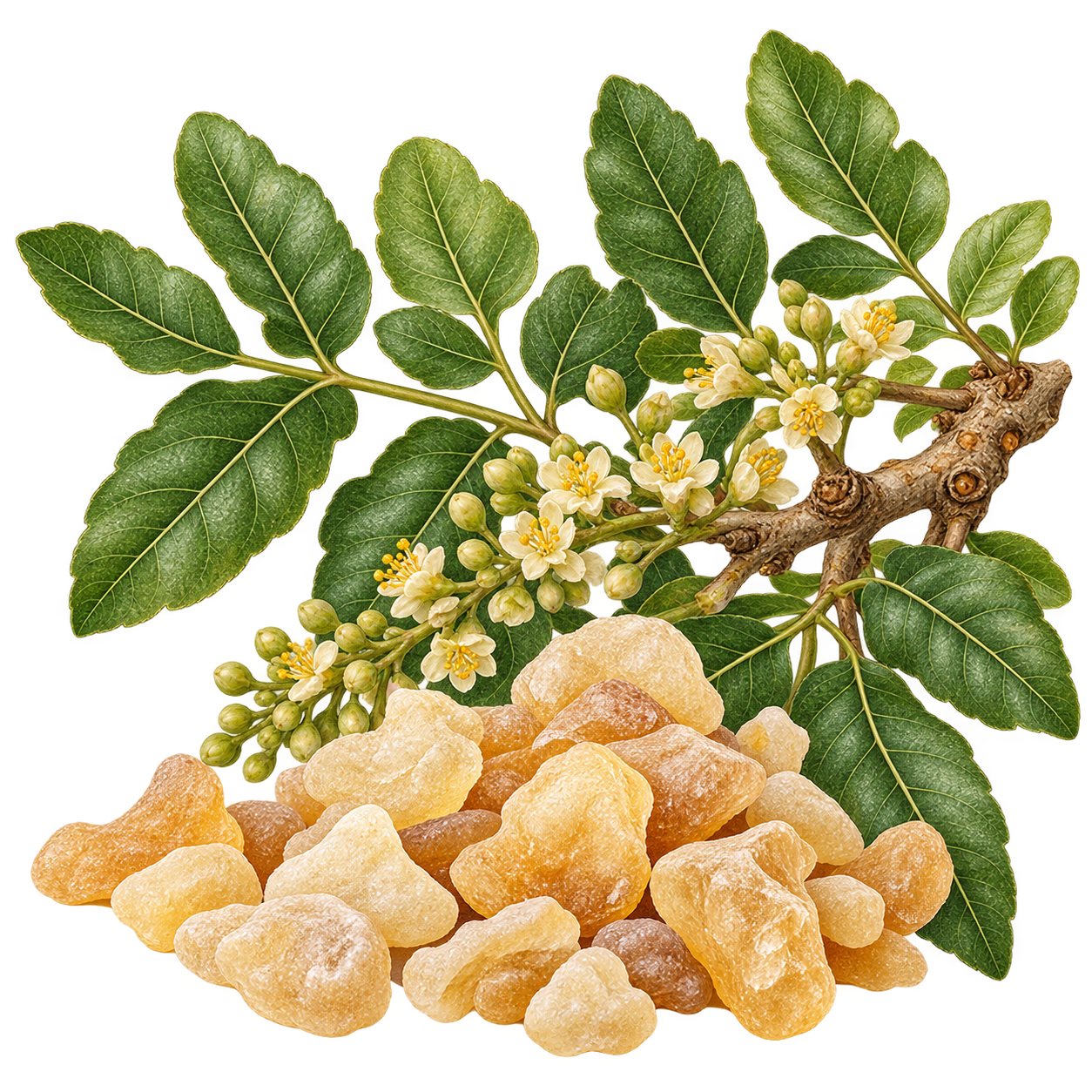
Frankincense is an aromatic oleo-gum-resin obtained from several Boswellia species in the Burseraceae family. Common trade sources include Boswellia sacra, Boswellia carterii, Boswellia frereana, and Boswellia serrata.Quick Reference
Traditional Uses
Frankincense has a long history as incense, perfume, fumigant, ritual offering, and trade resin.
Magical Associations
- Purification
- blessing
- spiritual elevation
- consecration
- protection
- devotion
- prayer
- clarity
- sacred space
- ancestor reverence
- peace.
Folklore
Frankincense was one of the most significant aromatic trade goods of the ancient world. It moved along incense routes linking southern Arabia, northeast Africa, the Mediterranean, and beyond. It appears in ancient Egyptian ritual and embalming contexts, in Jewish and Christian liturgical history, and in Islamic, African, South Asian, and other regional aromatic traditions.
Core Correspondences
Witchcraft Uses
- Loose incense
- altar consecration
- cleansing and blessing rites
- devotional offerings
- ancestor altars
- meditation
- ritual oils and incense blends
- protection work
- space clearing.
⚠ Caution
Use only in a fire-safe burner on appropriate charcoal or other safe heating medium. Resin smoke may irritate sensitive people or pets; ventilate as needed. Do not ingest unknown resin preparations. Keep away from children, pets, and flammable materials. Some individuals may have skin sensitivity to resin or essential oil preparations.
Educational purposes only. Not medical advice.How to Work With
Burn a small amount on charcoal in a heat-safe burner for cleansing, prayer, meditation, or altar work. Blend with herbs or other resins for offerings or space clearing. Resin tears can also be kept in bowls or jars as altar material, used in sachets when not heated, or symbolically added to ritual work focused on sanctification and reverence.
Best Time to Harvest
Resin is harvested after controlled tapping cuts are made in the bark and the exuded resin is allowed to dry and harden before collection. Timing varies by species, climate, and local practice.
Correspondences
- Color
- Gold, white, amber
- Metal
- Gold
Page 2 of 2
Deeper Reading
Botanical Profile
- Plant Family
- Burseraceae
- Common Names
- olibanum · Boswellia resin.
- Growth Habit
- Small to medium resin-producing tree or shrub, depending on species, adapted to arid or semi-arid landscapes.
- Native Range
- Frankincense-yielding Boswellia species are native mainly to the Arabian Peninsula, the Horn of Africa, and parts of India, depending on the species. Boswellia sacra is associated especially with Oman and Yemen; Boswellia carterii and related trade resins are associated with Somalia and nearby regions; Boswellia serrata is associated with India.
- Habitat
- Dry rocky hillsides, desert margins, limestone slopes, and other harsh environments with strong drainage and seasonal aridity. The resin is collected by tapping the bark and allowing aromatic tears to harden.
- Identifying Characteristics
- The public commonly encounters frankincense as pale gold to amber resin tears or pieces with a balsamic, citrus-resin aroma when warmed or burned. Source trees usually have papery peeling bark, compound leaves, and small clustered flowers, though appearance varies by species.
- Parts Traditionally Used
- Aromatic oleo-gum-resin tears and pieces.
Traditional & Historical Medicinal Uses
Boswellia resins appear in a range of traditional medical systems as aromatic materials associated historically with inflammation, respiratory complaints, topical preparations, and spiritual cleansing.
Magical Uses
Loose incense; altar consecration; cleansing and blessing rites; devotional offerings; ancestor altars; meditation; ritual oils and incense blends; protection work; space clearing.
Modern Evidence
Historical incense and traditional herbal use do not establish broad modern medical benefits. Resin smoke can irritate, and extracts differ substantially; ritual use and clinical claims must remain separate.
Notes & Personal Connection
Add your own experiences, observations, and notes about working with this plant. How does it speak to you? What is your personal connection?
Keep This Grimoire Entry
Print Page 1 and Page 2 together, single-sided or front and back.
Download to Print