Herbs & Salts Grimoire
Lavender
Lavandula angustifoliaQuick Reference
Traditional Uses
Lavender has long histories in fragrance, bathing, household care, and European herbal practice for mild stress, sleep, and skin preparations. Evidence and safety depend on the product and use.
Magical Associations
- Peace
- Love
- Sleep
- Dreams
- Purification
- Protection
- Healing symbolism
- Clarity
Folklore
The name is often linked with Latin washing traditions, reflecting lavender's long use in baths, linens, fragrance, and household cleanliness.
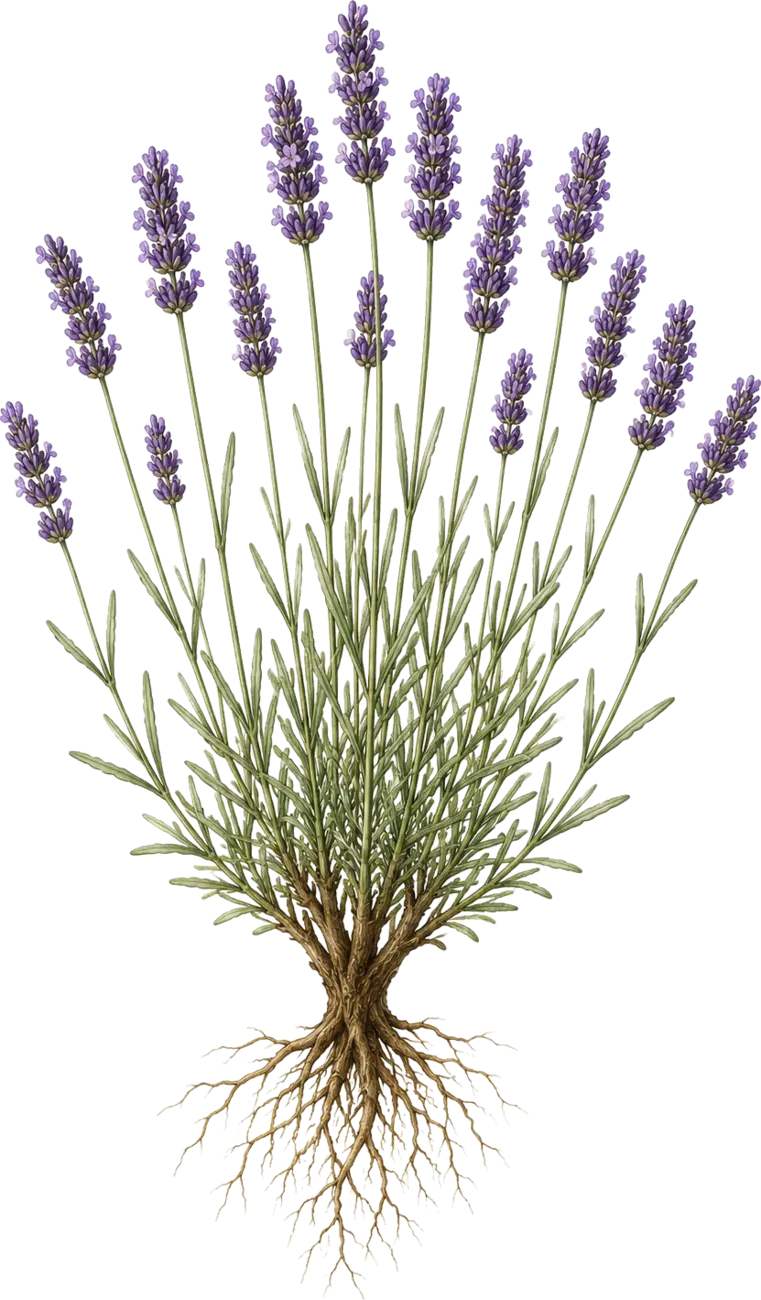
Core Correspondences
Witchcraft Uses
- Dream sachets
- Peace charms
- Love altar work
- Purification symbolism
- Protection bundles
⚠ Caution
Lavender can cause skin irritation or allergy, and essential oil is unsafe to swallow. Sedation and medication interactions are possible; pregnancy, breastfeeding, children, and pets require qualified guidance.
Educational purposes only. Not medical advice.How to Work With
Keep dried flowers sealed in a dream or peace sachet, use the botanical image in love or cleansing work, or grow it for pollinators. Do not ingest essential oil or apply it undiluted.
Page 2 of 2
Deeper Reading
Botanical Profile
- Plant Family
- Lamiaceae
- Common Names
- English lavender
- Alternate Names
- True lavender · Common lavender · Lavandula officinalis · Lavandula vera
- Growth Habit
- Woody evergreen aromatic subshrub
- Native Range
- Southwestern and south-central Europe
- Habitat
- Dry sunny rocky slopes, scrub, open woodland, and well-drained cultivated gardens
- Identifying Characteristics
- A compact woody shrub with narrow gray-green opposite leaves and long leafless stalks bearing dense purple-blue flower spikes.
- Parts Traditionally Used
- Flowers · Flowering tops · Essential oil
Traditional & Historical Medicinal Uses
Lavandula angustifolia has been cultivated for scent, household washing, perfumery, and herbal preparations for centuries. European traditions used flowers and oil around mild nervous tension, rest, and minor skin concerns. Some modern products have been studied, but results cannot be generalized to homemade preparations or every lavender oil. Essential oil is concentrated and differs substantially from culinary flower use.
Magical Uses
Lavender's enduring fragrance and household cleansing history support magical themes of peace, love, purification, protection, and dreams. Its purple flowers also invite associations with clarity and contemplative practice. Keep dried flowers sealed in a dream sachet, place them on a peace altar, or use the image in love and cleansing work. Avoid smoke and undiluted oil.
Modern Evidence
Lavender's fragrance and traditional-use history do not establish broad medical benefits. Evidence is preparation-specific, while essential oil ingestion, allergy, sedation, pregnancy, pets, and medicine interactions require separate guidance.
Notes & Personal Connection
Add your own experiences, observations, and notes about working with this plant. How does it speak to you? What is your personal connection?
Keep This Grimoire Entry
Print Page 1 and Page 2 together, single-sided or front and back.
Download to Print