Herbs & Salts Grimoire
Lemon Balm
Melissa officinalisQuick Reference
Traditional Uses
Lemon balm leaf has a long culinary and European herbal history associated with mild stress, sleep, and digestive discomfort. These are traditional-use contexts, not guarantees of benefit.
Magical Associations
- Calm
- Peace
- Love
- Friendship
- Joy
- Comfort
- Protection
- Purification
- Clarity
Folklore
Its bee-linked name and long monastery-garden history connect Lemon Balm with kindness, hospitality, joy, and a peaceful heart in European folklore and modern practice.
Core Correspondences
Witchcraft Uses
- Peace sachets
- Friendship charms
- Comfort altar work
- Gentle cleansing rituals
- Garden blessing
⚠ Caution
Culinary amounts are commonly used, but concentrated products and medicinal use require more care. Allergy is possible, and pregnancy, breastfeeding, thyroid concerns, sedation, or medication use warrant qualified guidance.
Educational purposes only. Not medical advice.How to Work With
Grow it near a gathering place for pollinators, place fresh leaves on a peace or friendship altar, or keep dried leaves sealed in a comfort sachet. Do not prepare medicinal remedies based on this entry.
Page 2 of 2
Deeper Reading
Botanical Profile
- Plant Family
- Lamiaceae
- Common Names
- Balm
- Alternate Names
- Common balm · Sweet balm · Melissa · Honey balm
- Growth Habit
- Bushy aromatic herbaceous perennial
- Native Range
- Mediterranean region to Central Asia
- Habitat
- Woodland margins, hedges, disturbed ground, gardens, and other temperate sites with moist well-drained soil
- Identifying Characteristics
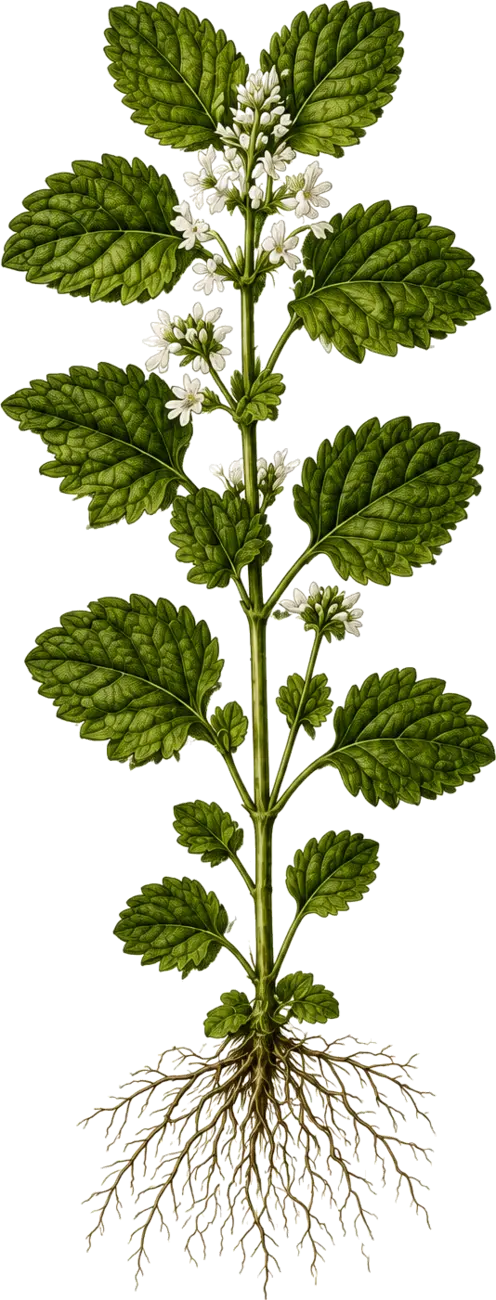
- Square stems with opposite, softly hairy, strongly veined ovate leaves with scalloped edges; crushed leaves smell of lemon, and small white flowers form in the leaf axils.
- Parts Traditionally Used
- Leaves · Flowering aerial parts
Traditional & Historical Medicinal Uses
Lemon balm has been cultivated as a fragrant culinary and garden herb since antiquity. European herbal traditions used the leaf in preparations associated with mild nervous tension, sleep, and digestive discomfort, and it became an ingredient in monastic and cordial preparations. The European Medicines Agency recognizes these as traditional-use indications based on long-standing use; that classification is not the same as proof from strong modern clinical evidence.
Magical Uses
Lemon balm's bright citrus fragrance, bee-attracting flowers, and long garden history support magical associations with joy, friendship, comfort, peace, and gentle cleansing. Its genus name Melissa is linked with the Greek word for honey bee, strengthening contemporary symbolism of community and sweetness. Fresh leaves may be placed on a seasonal altar or the botanical image used in friendship and comfort work. Keep ritual preparations non-ingestible unless their culinary identity, quality, and personal suitability are independently established.
Notes & Personal Connection
Add your own experiences, observations, and notes about working with this plant. How does it speak to you? What is your personal connection?
Keep This Grimoire Entry
Print Page 1 and Page 2 together, single-sided or front and back.
Download to Print