Herbs & Salts Grimoire
Lemon Verbena
Aloysia citrodoraQuick Reference
Traditional Uses
Lemon verbena leaf has a history in South American and European herbal traditions, particularly for mild digestive complaints, stress, and sleep. Traditional use does not establish medical effectiveness.
Magical Associations
- Upliftment
- Peace
- Love
- Harmony
- Cleansing
- Good fortune
- Heart healing symbolism
Folklore
Sometimes called a sunshine herb, lemon verbena has been welcomed into homes for its fragrance and associated in modern folklore with joy, a calm mind, and positive household energy.
Core Correspondences
Witchcraft Uses
- Peace and happiness sachets
- External ritual baths
- Cleansing and uplifting spellwork
- Love and harmony intentions
- Mood-brightening altar work
⚠ Caution
Culinary leaf use differs from essential oil and concentrated extracts. Avoid medicinal use during pregnancy, breastfeeding, childhood, kidney disease, or with medicines unless a qualified clinician confirms it is appropriate.
Educational purposes only. Not medical advice.How to Work With
Use correctly identified dried leaves in a sealed peace or harmony sachet, a strained external ritual bath, or as a fragrant altar offering. Do not ingest concentrated extracts or use essential oil based on this entry.
Page 2 of 2
Deeper Reading
Botanical Profile
- Plant Family
- Verbenaceae
- Alternate Names
- Lemon beebrush · Lemon-scented verbena · Aloysia triphylla · Lippia citriodora · Verbena triphylla
- Growth Habit
- Aromatic deciduous shrub
- Native Range
- Southern Bolivia to northwestern Argentina
- Habitat
- Subtropical scrub and slopes; widely cultivated in warm gardens and containers
- Identifying Characteristics
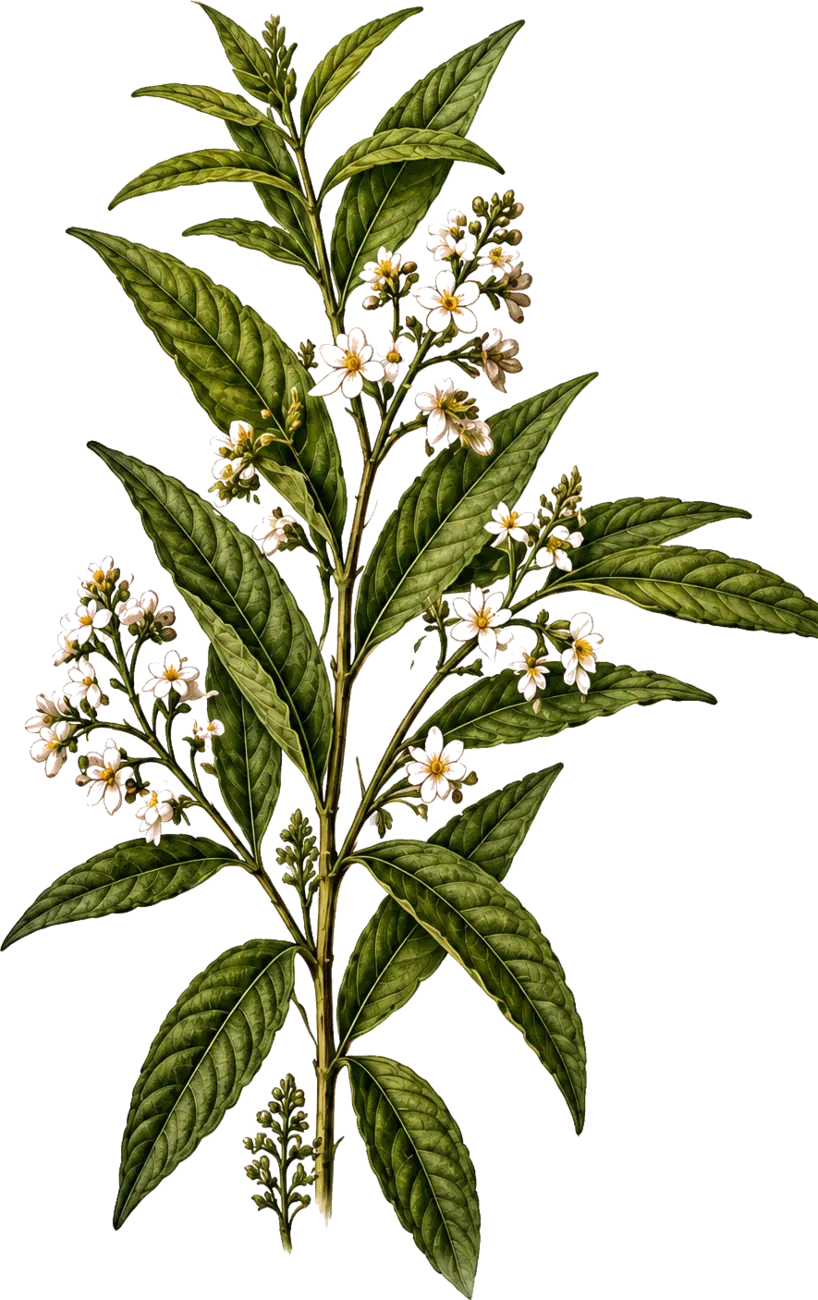
- A woody aromatic shrub with narrow lance-shaped leaves commonly arranged in whorls of three and slender terminal sprays of tiny pale lilac-white flowers; crushed leaves smell strongly of lemon.
- Parts Traditionally Used
- Leaves · Flowering tops
Traditional & Historical Medicinal Uses
Lemon verbena is native to South America and became a valued aromatic garden and household plant after its introduction elsewhere. Its fragrant leaves have been used as a culinary flavoring and in traditional preparations for mild digestive complaints, nervous tension, and sleep. The European Medicines Agency has evaluated lemon verbena leaf for traditional herbal use, where conclusions rest on longstanding use rather than strong clinical evidence. Food flavoring, traditional tea, essential oil, and concentrated extracts are not interchangeable in dose or safety.
Magical Uses
Lemon verbena's vivid citrus fragrance gives it a contemporary magical language of brightness, clarity, joy, and renewed movement. Practitioners may use correctly identified dried leaves in a sealed sachet for peace or harmony, add a strained infusion to an external ritual bath, or place the botanical image on an altar devoted to happiness and emotional openness. Its solar appearance and scent support modern associations with optimism and good fortune. These are symbolic practices, not treatments for depression, anxiety, or relationship problems.
Notes & Personal Connection
Add your own experiences, observations, and notes about working with this plant. How does it speak to you? What is your personal connection?
Keep This Grimoire Entry
Print Page 1 and Page 2 together, single-sided or front and back.
Download to Print