Herbs & Salts Grimoire
Marjoram
Origanum majorana L.Quick Reference
Traditional Uses
Marjoram has long culinary use and documented traditional herbal use.
Magical Associations
- Love
- Peace
- Domestic harmony
- Comfort
- Protection
- Healing symbolism
- Remembrance
- Grief
- Marriage / partnership
- Reconciliation
- Home blessing
Folklore
Marjoram has centuries of Mediterranean culinary and household history. Older European herbals and later folklore collections associate marjoram with love, marriage, happiness, remembrance, and mourning.
Core Correspondences
Witchcraft Uses
- Peaceful-home work
- Reconciliation rituals
- Love work focused on mutual care rather than control
- Grief and remembrance
- Marriage or partnership blessings
- Home protection
- Comfort rituals
- Kitchen witchcraft
- Cleansing after arguments or tension
⚠ Caution
Culinary herb use and concentrated essential oil use are not equivalent. Essential oil is highly concentrated and should not be ingested or applied undiluted simply because the culinary herb is familiar. The EMA’s traditional-use monograph applies to specific marjoram preparations, not every homemade preparation.
Educational purposes only. Not medical advice.How to Work With
Add dried marjoram to a labeled peace or home-blessing bowl. Use it in a simmer pot only if scent is safe for your household. Place a sprig near a written reconciliation intention. Include it in a grief or remembrance altar where the association feels appropriate. Use culinary marjoram in a shared meal as a practical act of hospitality. Pair it with the question: What would make this home feel gentler in practice, not just in intention?
Best Time to Harvest
Leaves may be clipped during active growth. For strongest culinary aroma, harvest before or around flowering. Flowering shoots may be gathered during bloom. Cut on a dry day after surface moisture has evaporated and dry promptly with good airflow.
Correspondences
- Season
- summer
Page 2 of 2
Deeper Reading
Botanical Profile
- Plant Family
- Lamiaceae
- Common Names
- Sweet marjoram · knotted marjoram
- Growth Habit
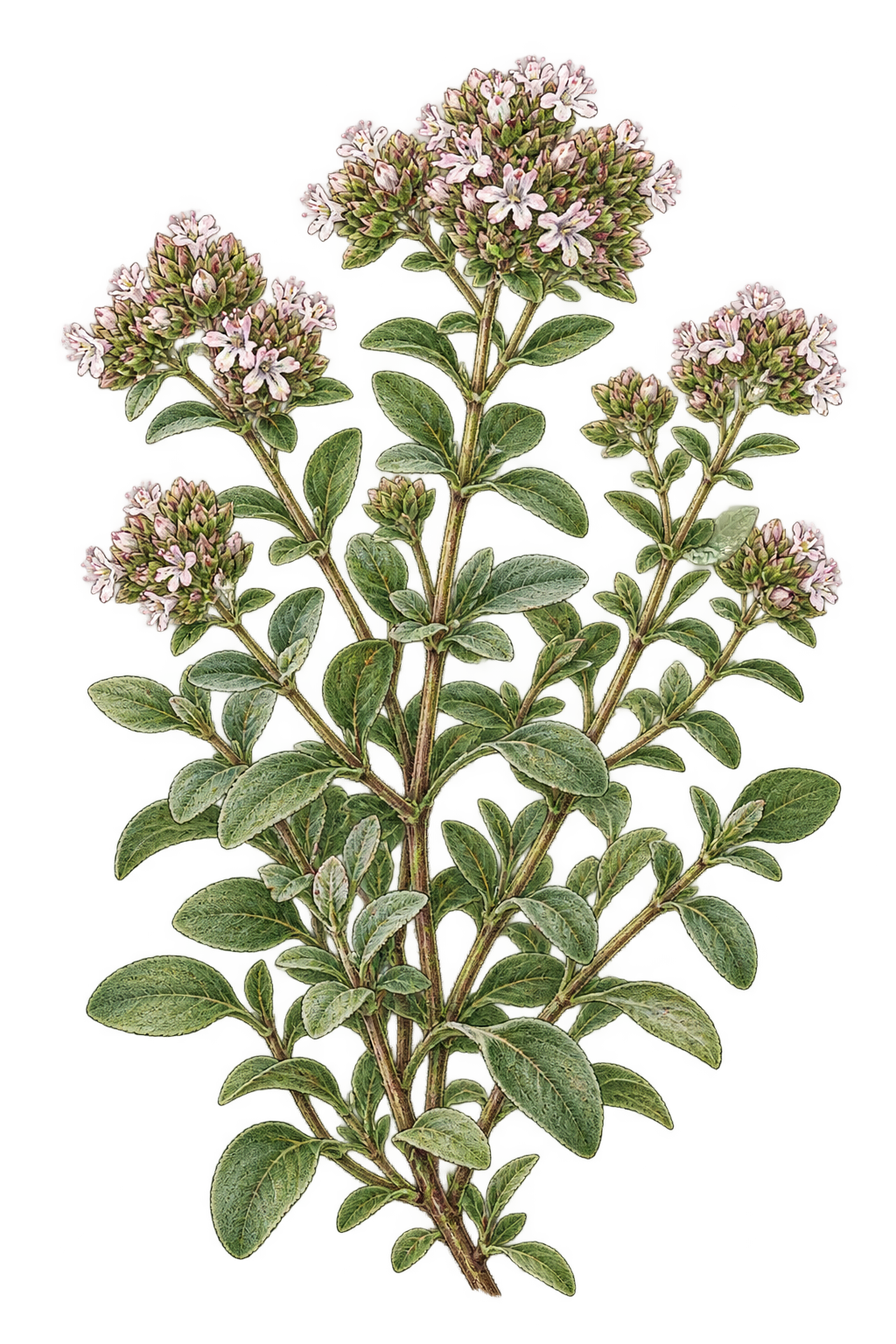
- Aromatic herb or small subshrub, perennial in warm climates and often grown as an annual where winters are cold. Kew describes plants up to about 0.8 m depending on conditions.
- Native Range
- Kew currently lists the native range of O. majorana as southern Türkiye and Cyprus. It has been cultivated and introduced widely elsewhere.
- Habitat
- Marjoram is commonly grown in herb gardens and containers. It generally prefers: Full sun Well-drained soil Good air circulation Moderate watering Protection from hard freezes It is well suited to pots where winter protection is needed.
- Identifying Characteristics
- Typical features: Soft, small, rounded to oval aromatic leaves Opposite leaves, typical of the mint family Square-ish stems characteristic of many Lamiaceae Compact branching habit Small white to pale pinkish flowers Distinct sweet, warm aroma Do not confuse sweet marjoram with oregano, wild marjoram, or hybrid Origanum sold under overlapping common names.
- Parts Traditionally Used
- Leaves · Flowering shoots · Aerial parts
Taxonomic Note
Marjoram is closely related to oregano but is not the same canonical species. Origanum majorana should remain separate from the existing oregano record for Origanum vulgare.
History & Cultural Context
Marjoram has centuries of Mediterranean culinary and household history. Older European herbals and later folklore collections associate marjoram with love, marriage, happiness, remembrance, and mourning. Because ancient Greek and Roman plant names do not always map cleanly onto modern botanical species, claims that “the Greeks used Origanum majorana exactly this way” should be made cautiously unless a source clearly identifies the species. A safer Grimoire framing is: Marjoram belongs to a Mediterranean Origanum tradition. Later European symbolism strongly links marjoram with love, domestic happiness, remembrance, and comfort. Modern witchcraft builds on those themes.
Traditional & Historical Medicinal Uses
Historical/traditional use — not a statement of proven modern effectiveness. The European Medicines Agency recognizes long-standing traditional use of marjoram preparations for mild indigestion, including bloating and flatulence, and for relief of irritated skin around the nostrils in specific topical preparations. The EMA explicitly bases these uses on long-standing tradition and notes a lack of strong clinical studies.
Magical Uses
Love Peace Domestic harmony Comfort Protection Healing symbolism Remembrance Grief Marriage / partnership Reconciliation Home blessing Peaceful-home work Reconciliation rituals Love work focused on mutual care rather than control Grief and remembrance Marriage or partnership blessings Home protection Comfort rituals Kitchen witchcraft Cleansing after arguments or tension Add dried marjoram to a labeled peace or home-blessing bowl. Use it in a simmer pot only if scent is safe for your household. Place a sprig near a written reconciliation intention. Include it in a grief or remembrance altar where the association feels appropriate. Use culinary marjoram in a shared meal as a practical act of hospitality. Pair it with the question: What would make this home feel gentler in practice, not just in intention?
Modern Evidence
Modern research investigates marjoram’s aromatic compounds and biological activity, but the EMA assessment remains a useful guardrail: the traditional uses are not equivalent to high-quality proof of broad therapeutic effects. Marjoram in ordinary culinary amounts is very different from concentrated essential oil or extract products.
Notes & Personal Connection
Add your own experiences, observations, and notes about working with this plant. How does it speak to you? What is your personal connection?
Keep This Grimoire Entry
Print Page 1 and Page 2 together, single-sided or front and back.
Download to Print