Herbs & Salts Grimoire
Mugwort
Artemisia vulgaris L.Quick Reference
Traditional Uses
Mugwort has a long history in foodways, bittering, herbal traditions, moxibustion contexts in related Artemisia species, and household use. In Western occult and folk practice it is especially remembered for dream, divination, travel, and protective associations.
Magical Associations
- Dreams
- intuition
- divination
- psychic protection
- liminality
- ancestor work
- moon magic
- travel protection
- banishing
- vision.
Folklore
Mugwort is one of the classic plants of European folk tradition. It appears in protective lore, midsummer custom, traveling charms, and dream or visionary practice. Its name has been connected with flavoring drinks, with protective girdles or garlands, and with warding influences. Modern witchcraft often emphasizes its liminal reputation: crossroads, moon work, ancestor work, dreams, and divination.
Core Correspondences
Witchcraft Uses
- Dream pillows
- divination incense
- smoke cleansing where appropriate and safe
- moon rites
- ancestor altars
- ritual baths
- protective sachets
- meditation
- shadow-work support.
⚠ Caution
Avoid use during pregnancy. People sensitive to plants in the daisy family may react to mugwort. It may also be inappropriate for some medical conditions or medications. Smoke and concentrated preparations may irritate some people. Ritual use does not override allergy, dosage, or other safety considerations.
Educational purposes only. Not medical advice.How to Work With
Use dried mugwort in incense, ritual baths, ancestor offerings where appropriate, dream sachets, or bundles for smoke cleansing if smoke is safe for the setting. It can also be used as an altar herb for moon or shadow-work practices, brewed as tea only when using food-grade herb and with full safety awareness, or carried in small protective sachets.
Best Time to Harvest
Harvest aerial growth shortly before or during flowering for drying, incense, bundles, or tea traditions, ideally on a dry day after dew has evaporated.
Correspondences
Page 2 of 2
Deeper Reading
Botanical Profile
- Plant Family
- Asteraceae
- Common Names
- common mugwort · wild wormwood
- Growth Habit
- Aromatic rhizomatous perennial herb that can form tall colonies.
- Native Range
- Native to Europe, temperate Asia, and parts of northern Africa; widely naturalized elsewhere, including North America.
- Habitat
- Roadsides, field margins, disturbed ground, meadows, hedgerows, riverbanks, and other sunny to partly shaded habitats. It spreads by rhizomes and can be vigorous.
- Identifying Characteristics
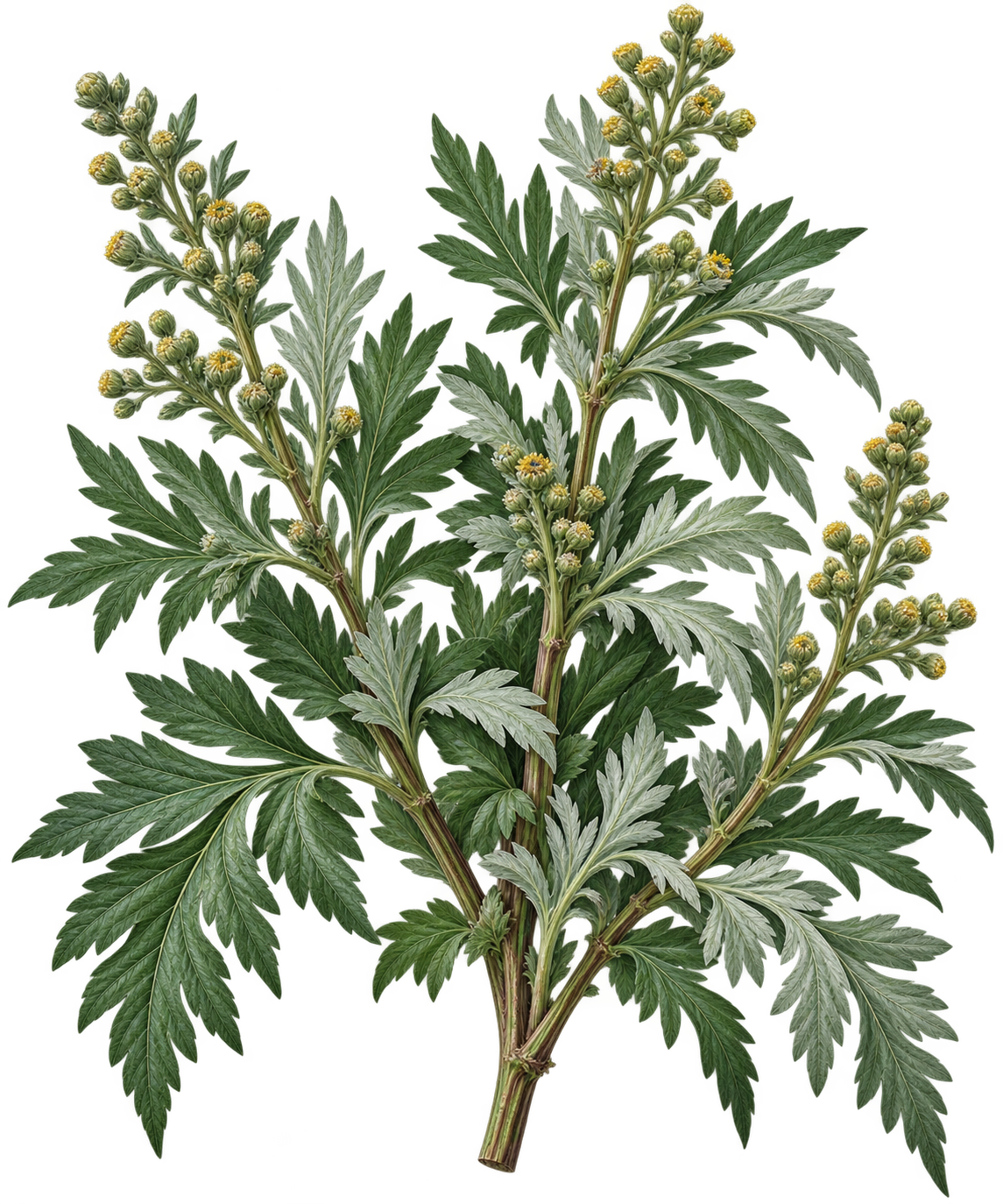
- An upright perennial with deeply lobed dark green leaves that are distinctly paler or silvery-white beneath, reddish to purplish stems, and small inconspicuous flower clusters. The plant is aromatic and bitter.
- Parts Traditionally Used
- Aerial parts, especially leaves and flowering tops.
Traditional & Historical Medicinal Uses
Historical herbals and folk traditions used mugwort in a range of household, digestive, and women’s-health contexts.
Magical Uses
Dream pillows; divination incense; smoke cleansing where appropriate and safe; moon rites; ancestor altars; ritual baths; protective sachets; meditation; shadow-work support.
Modern Evidence
Mugwort's long ritual and herbal history does not establish medical effectiveness. Allergy, pregnancy, species identity, smoke exposure, and concentrated preparations require caution; this entry does not recommend internal use.
Notes & Personal Connection
Add your own experiences, observations, and notes about working with this plant. How does it speak to you? What is your personal connection?
Keep This Grimoire Entry
Print Page 1 and Page 2 together, single-sided or front and back.
Download to Print