Herbs & Salts Grimoire
Star Anise
Illicium verum Hook.f.Quick Reference
Traditional Uses
A major culinary spice in Chinese, Vietnamese, Indian, Malaysian, Indonesian, and other cuisines. It is an ingredient in Chinese five-spice and is used in broths, braises, teas, sweets, and aromatic beverages. It also has a history in traditional medicine and fragrance.
Magical Associations
- Protection
- luck
- spiritual focus
- divination
- clarity
- intuition
- prosperity
- purification
- dream work.
Folklore
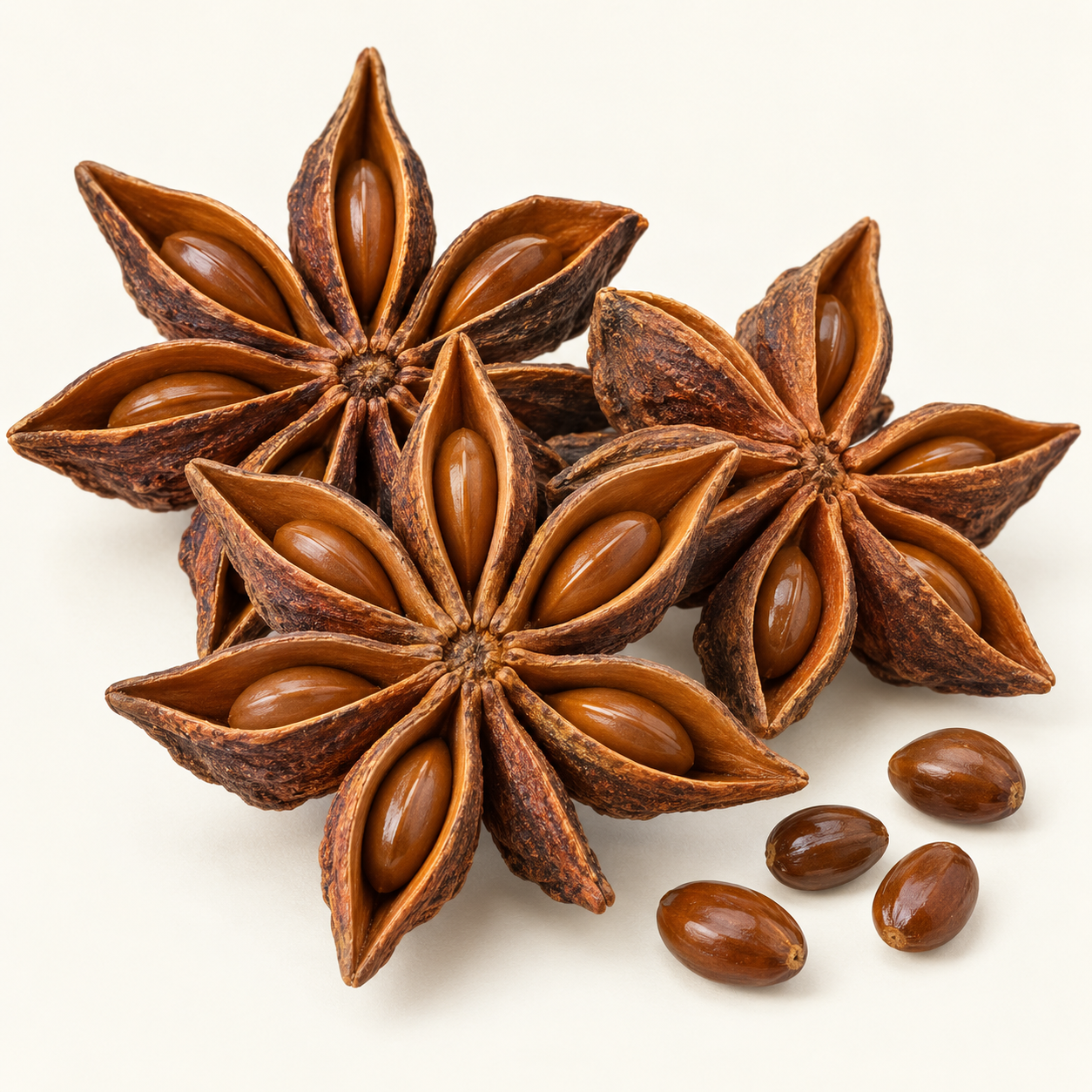
Star anise’s striking eight-pointed form made it visually attractive in household, culinary, and later magical symbolism. Modern witchcraft often associates the star shape with protection, luck, divination, and spiritual focus. These are modern or folk-metaphysical layers and should remain distinct from the plant’s documented culinary and medicinal history in Asia.
Core Correspondences
Witchcraft Uses
- Protection charms
- prosperity bowls
- incense
- divination blends
- ritual tea when food-grade
- simmer pots
- altar decoration
- luck work
- dream sachets.
⚠ Caution
Use only properly identified Illicium verum for food or tea. Japanese star anise (Illicium anisatum) is toxic and must not be substituted. Essential oil is highly concentrated and requires separate safety guidance. Keep small hard fruits away from children and pets.
Educational purposes only. Not medical advice.How to Work With
Use whole stars in simmer pots, charm bowls, protective arrangements, or incense blends. Food-grade star anise may be used in tea or cooking. The star shape can be used intentionally as a symbol of direction, protection, or focused intention.
Best Time to Harvest
Fruits are traditionally harvested just before full ripening, when aromatic oil content is high, then dried until hard and reddish-brown.
Correspondences
Page 2 of 2
Deeper Reading
Botanical Profile
- Plant Family
- Schisandraceae
- Common Names
- Chinese star anise · star aniseed · badian.
- Growth Habit
- Aromatic evergreen tree, potentially reaching about 10–15 m in suitable subtropical conditions.
- Native Range
- Native to southern China, especially Guangxi, and northern Vietnam.
- Habitat
- Subtropical evergreen forest conditions and cultivated plantations in East and Southeast Asia. Prefers warm humid climates.
- Identifying Characteristics
- Glossy leathery leaves; small pale yellow-green to pinkish flowers; distinctive star-shaped woody fruit formed from usually 7–9 radiating carpels, each commonly containing one glossy brown seed.
- Parts Traditionally Used
- Dried ripe or nearly ripe star-shaped fruit · essential oil in commercial flavoring and fragrance applications.
History & Cultural Context
Illicium verum has a long East and Southeast Asian culinary and trade history. It must be distinguished from toxic Japanese star anise, Illicium anisatum, even though the dried fruits can look similar.
Traditional & Historical Medicinal Uses
Star anise has documented use in Chinese traditional medicine for digestive and respiratory complaints and as an aromatic stimulant. Modern pharmaceutical manufacturing has also used star anise as a commercial source of shikimic acid.
Magical Uses
Protection charms; prosperity bowls; incense; divination blends; ritual tea when food-grade; simmer pots; altar decoration; luck work; dream sachets.
Modern Evidence
Culinary Illicium verum is not interchangeable with toxic Illicium anisatum. Traditional use and laboratory findings do not establish broad treatment claims, and identity-controlled food-grade material is essential.
Notes & Personal Connection
Add your own experiences, observations, and notes about working with this plant. How does it speak to you? What is your personal connection?
Keep This Grimoire Entry
Print Page 1 and Page 2 together, single-sided or front and back.
Download to Print