Herbs & Salts Grimoire
Oatstraw
Avena sativaQuick Reference
Traditional Uses
Green oat herb has a history in Western herbal practice as a gentle preparation for mild stress and sleep support. This traditional use does not establish medical effectiveness.
Magical Associations
- Calm
- Relaxation
- Restoration
- Inner strength
- Patience
- Stability
- Gentle healing symbolism
Folklore
Oats have long represented sustenance, steady energy, and the strength found in flexibility. Modern oatstraw folklore emphasizes restoration during exhaustion and emotional strain.
Core Correspondences
Witchcraft Uses
- Calming sachets
- Sealed dream pillows
- Ritual baths
- Restoration spellwork
- Offerings for gratitude and nourishment
⚠ Caution
Oat herb preparations are not the same as oat food. Avoid use with oat allergy; people with celiac disease or gluten sensitivity need reliably uncontaminated material. Pregnancy, breastfeeding, childhood, medicine interactions, and concentrated-use safety require qualified guidance.
Educational purposes only. Not medical advice.How to Work With
Use correctly identified oatstraw in a sealed calming sachet or dream pillow, a strained external ritual bath, or a gratitude offering. Do not ingest concentrated preparations based on this entry.
Page 2 of 2
Deeper Reading
Botanical Profile
- Plant Family
- Poaceae
- Common Names
- Oat straw · Cultivated oat
- Alternate Names
- Green oat herb · Oat herb · Avena · Milky oats · Common oat
- Growth Habit
- Erect annual cereal grass
- Native Range
- A western Asian cultigen, now cultivated throughout temperate regions
- Habitat
- Cultivated fields and occasionally disturbed ground near cultivation
- Identifying Characteristics
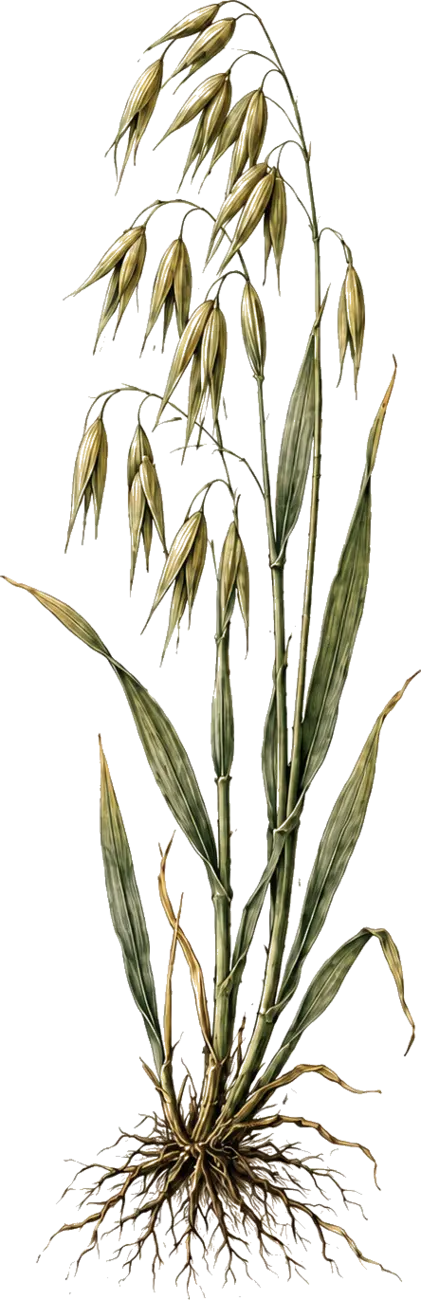
- Erect hollow culms with long flat blades and an open, nodding panicle of pendulous oat spikelets; the roots form a fibrous mass.
- Parts Traditionally Used
- Green aerial parts · Stems · Leaves · Immature seed heads
Traditional & Historical Medicinal Uses
Oat herb consists of the green aerial parts of Avena sativa harvested before the grain fully matures. Western herbal traditions have described it as a restorative or nutritive preparation during periods of fatigue, nervous strain, and convalescence. The European Medicines Agency recognizes traditional-use preparations for mild mental stress and as an aid to sleep, based on longstanding use rather than strong clinical evidence. Oat grain and oat herb are different materials, and food use of oats does not automatically establish the safety or effectiveness of concentrated herb preparations.
Magical Uses
Oatstraw's symbolism grows from oats as a sustaining crop and from the flexible stems that bend without easily breaking. Contemporary practitioners associate it with nourishment, calm, patience, stability, and recovery after strain. Correctly identified dried oatstraw may be kept in a sealed calming sachet or dream pillow, added to a strained external ritual bath, or placed as a symbolic offering of gratitude and provision. These spiritual uses are not substitutes for care for anxiety, sleep problems, or other health concerns.
Notes & Personal Connection
Add your own experiences, observations, and notes about working with this plant. How does it speak to you? What is your personal connection?
Keep This Grimoire Entry
Print Page 1 and Page 2 together, single-sided or front and back.
Download to Print