Herbs & Salts Grimoire
Skullcap
Scutellaria laterifloraQuick Reference
Traditional Uses
American skullcap has a history in North American herbal practice for nervous tension, restlessness, and sleep. These traditional uses do not establish effectiveness, and skullcap products require careful species identification and safety review.
Magical Associations
- Peace
- Calm
- Protection
- Psychic shielding
- Restful sleep
- Emotional balance
- Intuition
- Tranquility
Folklore
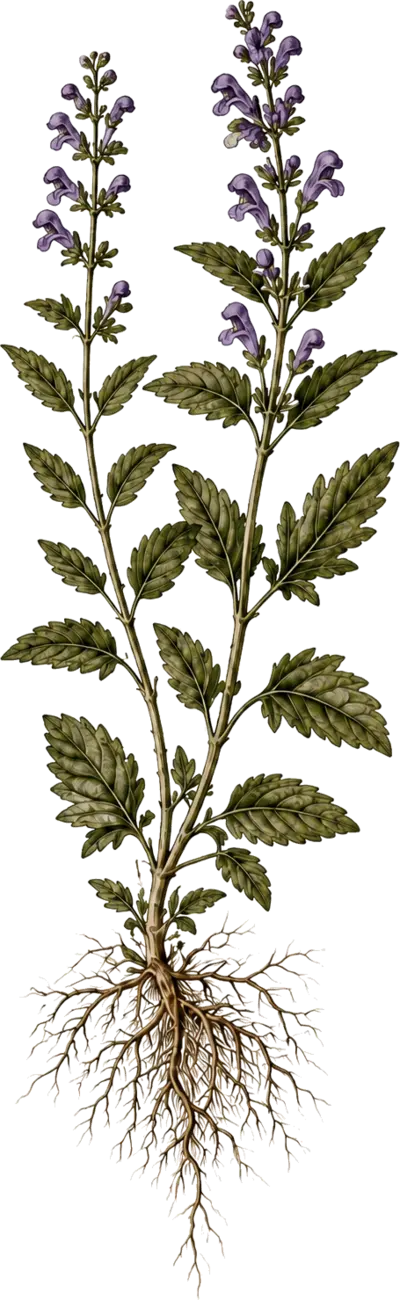
The name skullcap refers to the flower's helmet-like calyx. Folk and modern magical traditions have carried the herb as a symbol of protection and a quieted mind.
Core Correspondences
- Element
- Water
- Planet
- Moon
- Gender
- Feminine
- Energy
- CalmingProtectivePsychic
Witchcraft Uses
- Protection sachets
- Sealed dream pillows
- Peace and calm altar work
- Psychic-boundary rituals
- Emotional-balance spellwork
⚠ Caution
Skullcap may cause drowsiness and has been linked to rare liver injury, sometimes involving mixed products or adulterants. Avoid driving if affected, and seek qualified guidance before internal use, especially during pregnancy, breastfeeding, liver disease, or medication use.
Educational purposes only. Not medical advice.How to Work With
Keep correctly identified dried skullcap sealed in a protection sachet or dream pillow, place it on a lunar altar, or use it symbolically in peace and boundary work. Do not ingest, brew, or burn it based on this entry.
Page 2 of 2
Deeper Reading
Botanical Profile
- Plant Family
- Lamiaceae
- Common Names
- American skullcap · Blue skullcap
- Alternate Names
- Mad-dog skullcap · Side-flowering skullcap · Scutellaria · Scullcap · Helmet flower · Hoodwort
- Growth Habit
- Rhizomatous herbaceous perennial
- Native Range
- Canada and the United States
- Habitat
- Moist woods, marshes, wet meadows, streambanks, and other damp temperate habitats
- Identifying Characteristics
- Square branching stems with opposite serrated leaves and small blue-violet, two-lipped flowers borne along the leaf axils; the helmet-like calyx gives the genus its common name.
- Parts Traditionally Used
- Aerial parts · Leaves · Stems
Traditional & Historical Medicinal Uses
Scutellaria lateriflora has been used in North American herbal traditions as a calming preparation for nervous tension, restlessness, and sleep complaints. Historical accounts also describe broader uses that are not supported as modern treatments. Evidence for effectiveness remains limited, and products sold as skullcap have sometimes contained other Scutellaria species or adulterants. The species name matters: American skullcap is not interchangeable with Chinese skullcap or unrelated plants sold under similar names.
Magical Uses
Skullcap's contemporary magical associations draw on its long reputation as a calming herb and on the protective image of its helmet-shaped calyx. The approved Black Cat source links it with peace, sleep, psychic shielding, intuition, emotional balance, and protection. Practitioners may keep correctly identified dried material sealed in a protection sachet or dream pillow, place it on a lunar altar, or use it symbolically in rituals for quiet, boundaries, and emotional steadiness. These practices are spiritual and symbolic; they are not treatments for anxiety, insomnia, or other health conditions.
Notes & Personal Connection
Add your own experiences, observations, and notes about working with this plant. How does it speak to you? What is your personal connection?
Keep This Grimoire Entry
Print Page 1 and Page 2 together, single-sided or front and back.
Download to Print