Herbs & Salts Grimoire
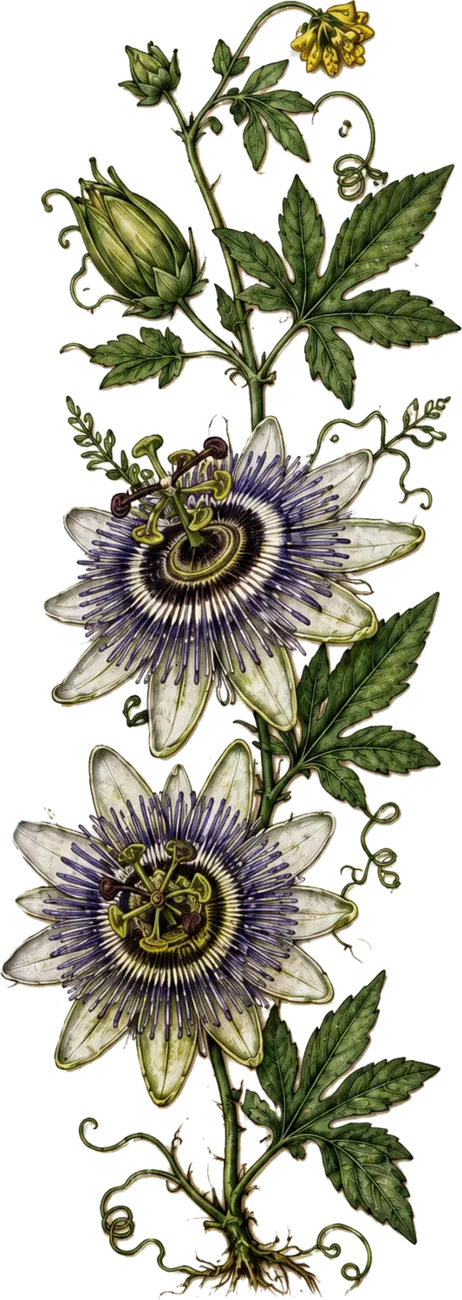
Passionflower
Passiflora incarnataQuick Reference
Traditional Uses
Passionflower has a history of use for mild mental stress and sleep. EMA recognizes these only as traditional-use indications; clinical evidence remains insufficient for firm conclusions.
Magical Associations
- Tranquility
- Calm
- Dreamwork
- Visions
- Emotional healing
- Spiritual protection
- Release of worry
- Intuition
Folklore
The name passionflower came from early Christian interpretations of the flower's intricate structures as symbols of the Passion of Christ. Later folk practice also associated it with peace, dreams, and surrender.
Core Correspondences
Witchcraft Uses
- Sealed dream pillows
- Calm and protection sachets
- Emotional-balance rituals
- Astral-boundary charms
- Quiet altar work
⚠ Caution
Passionflower may cause drowsiness, dizziness, or confusion. Do not combine casually with alcohol or sedating medicines, drive if affected, or use during pregnancy. Breastfeeding safety is not established.
Educational purposes only. Not medical advice.How to Work With
Use correctly identified dried passionflower in a sealed dream pillow or calm sachet, or place its botanical image on an altar for reflection, release, and emotional balance. Do not burn or ingest it based on this entry.
Best Time to Harvest
Where lawful and correctly identified, aerial parts are traditionally gathered around flowering from clean, unsprayed vines. Leave ample flowers and fruit for wildlife and regeneration, and confirm local conservation or cultivation guidance.
Correspondences
- Season
- Summer
Page 2 of 2
Deeper Reading
Botanical Profile
- Plant Family
- Passifloraceae
- Common Names
- Purple passionflower · Maypop
- Alternate Names
- Wild apricot · Passion vine · Passiflora · Passion flower
- Growth Habit
- Tendril-climbing herbaceous vine
- Native Range
- Central and eastern United States and Bermuda
- Habitat
- Open woods, thickets, roadsides, field edges, and disturbed sunny ground
- Identifying Characteristics
- A climbing vine with coiling tendrils, deeply three-lobed leaves, large intricate purple-and-white flowers, and oval maypop fruits.
- Parts Traditionally Used
- Aerial parts · Leaves · Flowers
Traditional & Historical Medicinal Uses
Passiflora incarnata has been used in North American and European herbal traditions for restlessness, mild nervous tension, and sleep difficulty. EMA recognizes preparations of the aerial parts for relief of mild symptoms of mental stress and to aid sleep on the basis of longstanding use, not strong clinical proof. NCCIH likewise notes that research in people is limited. The plant's traditional history should not be treated as a diagnosis or a substitute for care for persistent anxiety or sleep problems.
Magical Uses
Passionflower's intricate radial flower gave Christian missionaries a visual language for symbols of the Passion, while contemporary magical practice often reads its winding tendrils and striking bloom as emblems of surrender, calm, dreams, and trust. The approved source emphasizes tranquility, emotional healing, intuition, and spiritual protection. Correctly identified dried material may be kept in a sealed dream pillow or charm bag, or its image used during quiet reflection and release work. Incense and ingestion are excluded from practical guidance here.
Notes & Personal Connection
Add your own experiences, observations, and notes about working with this plant. How does it speak to you? What is your personal connection?
Keep This Grimoire Entry
Print Page 1 and Page 2 together, single-sided or front and back.
Download to Print