Deity Grimoire
Hekate
Greek goddess of crossroads and thresholds · Torch-bearing guideDomains
- Crossroads and thresholds
- Night and liminal spaces
- Guidance and protection
- Household boundaries
- Magic in later traditions
Symbols
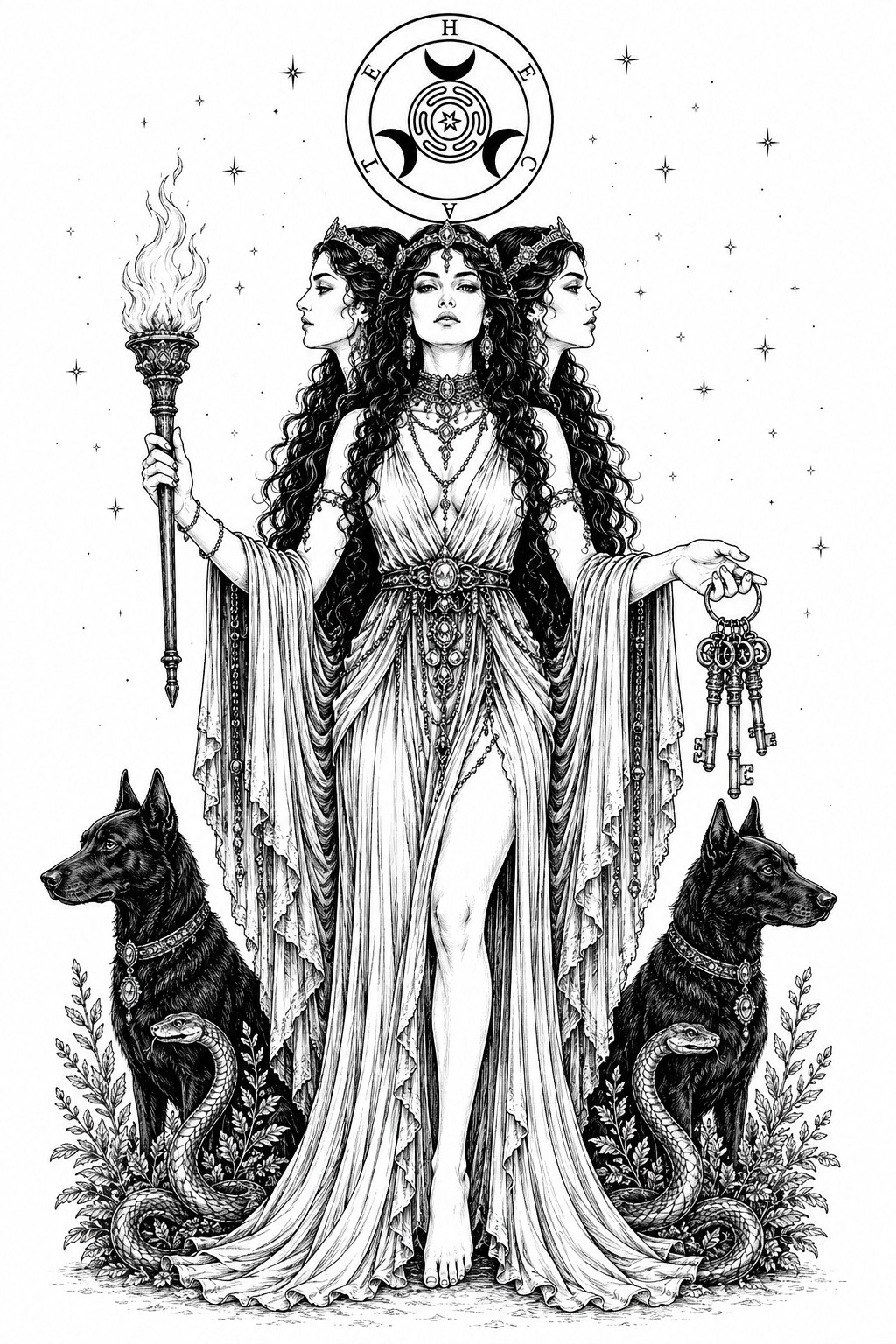
- Torches
- Keys
- Crossroads
- Dogs
- Triple-form imagery
Offerings
- Historically varied by place and period
- Modern devotees may offer food, incense, candles, keys, or acts of care at thresholds
Aspects
- Torch-bearing guide
- Guardian of thresholds
- Crossroads deity
- Household protector
- Triple-formed figure in later ancient imagery
Magical / Spiritual Work
- Threshold and crossroads work
- Guidance through transitions
- Protection
- Night practice
- Magic and witchcraft in later traditions
⚠ Important Context
Hekate’s identity developed across Greek and Roman antiquity. Early divine honors, household and crossroads worship, later ghostly and magical associations, and modern witchcraft devotion are connected but historically distinct layers.
Sacred Days / Festivals / Times
Associated with night and lunar imagery in some later and modern traditions
Devotional Approach
Study her changing historical roles; use torch, key, doorway, or crossroads symbolism for guidance, boundaries, and protection; and label present-day prayers, offerings, and rites as contemporary practice.
Page 2 of 2
Deeper Reading
Historical & Cultural Context
Hekate appears in early Greek literature as a goddess with wide-ranging honor rather than a figure limited to magic. Hesiod’s Theogony grants her authority across land, sea, and sky and describes her favor in civic, athletic, pastoral, and family concerns. The Homeric Hymn to Demeter places her in the search for Persephone as a torch-bearing witness and later companion. Classical and later evidence increasingly emphasizes crossroads, doorways, night, restless spirits, magic, and protective boundary roles. These layers developed across time and place; no single modern title captures every historical Hekate.
Myths & Primary Stories
In Hesiod’s Theogony, Hekate is the daughter of Perses and Asteria, honored by Zeus and able to grant favor in many areas of life. In the Homeric Hymn to Demeter, she hears Persephone’s cries, meets Demeter with torches, helps seek news of the abduction, and afterward becomes Persephone’s companion. Later Greek and Roman literature gives greater prominence to crossroads, night, ghosts, magic, and chthonic settings. Those later developments are historically important, but they should not be read backward as the whole of her earliest identity.
Evolution & Later Interpretations
Hekate’s representation changed within antiquity. Crossroads and doorway protection, triple-bodied or triple-facing images, dogs, torches, nocturnal processions, ghosts, and magic became especially prominent in later sources and art. Roman literature and later magical traditions further intensified her chthonic and sorcerous character. Modern Pagan and witchcraft communities often approach her through keys, crossroads, torches, the moon, protection, spirit work, and magical practice. These are living contemporary interpretations built from selected historical strands, not one unchanged practice transmitted from ancient Greece.
Worship & Historical Practice
Ancient evidence places Hekate in household, doorway, roadside, crossroads, protective, and civic settings that varied by region and period. Aristophanes refers to shrines before doors and along roads; Pausanias describes triple Hekate imagery; and classical testimony records monthly food offerings placed at crossroads. Such evidence supports specific historical practices, not a universal ritual script. Modern crossroads offerings, candle rites, and devotional schedules should therefore be labeled contemporary unless they reproduce a securely documented practice with its original context.
Working With & Honoring This Figure Today
Contemporary devotees may honor Hekate through historical study, prayer, lamps or candles, keys, threshold cleaning, boundary work, care for dogs, charitable action, and reflection during transitions. Some leave food or other offerings, but no modern offering is an ancient requirement simply because it is popular today. Crossroads practice should respect safety, property, wildlife, and local law. Modern rites can be meaningful while being described honestly as contemporary practice.
Notes & Personal Connection
Explore This Entry
Keep This Grimoire Entry
Print every generated page in order, single-sided or front and back.
Download to Print