Deity Grimoire
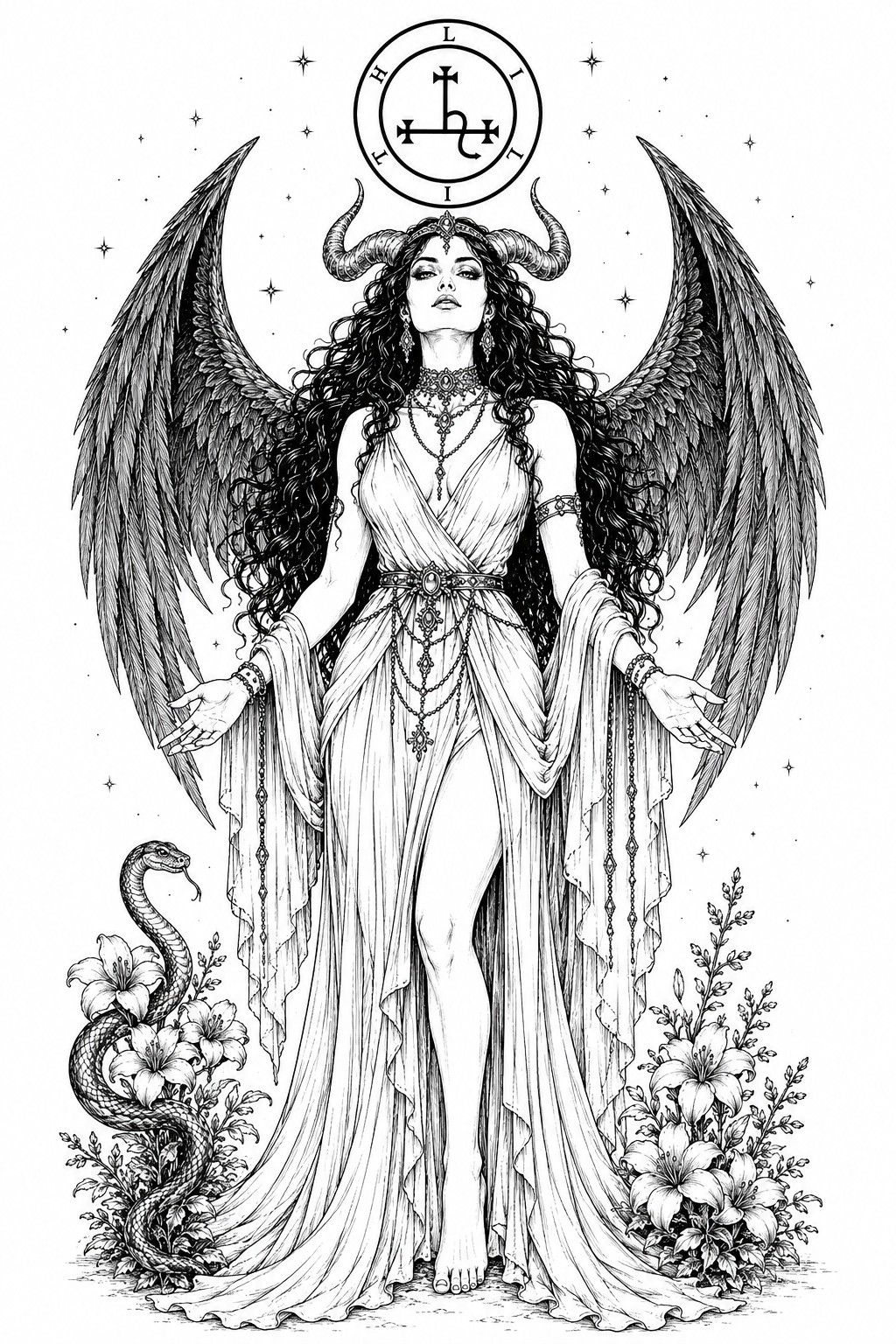
Lilith
Figure of Jewish folklore · Modern symbol of autonomyDomains
- Night and wilderness
- Danger surrounding childbirth in folklore
- Sexuality and autonomy in modern interpretation
- Exile and refusal
- Shadow integration in modern practice
Symbols
- Night
- Wilderness
- Wings in later art
- Protective amulets as evidence of apotropaic responses
- The name Lilith in modern Black Moon astrology
Offerings
- No securely attested ancient offering cult
- Modern practitioners may choose personal, non-historical offerings such as candles, water, poetry, or reflective writing
Aspects
- Mesopotamian lilītu-type spirit
- Biblical wilderness being
- Demon of later Jewish folklore
- Adam's first wife in the medieval Alphabet of Ben Sira
- Modern feminist and Pagan symbol
Magical / Spiritual Work
- Autonomy and boundaries
- Shadow work
- Reclaiming voice
- Sexual self-determination
- Reflection on exile and refusal
⚠ Important Context
Lilith was not one continuously worshipped ancient goddess. Mesopotamian spirits, the biblical lilith, medieval Jewish narrative, modern astrology, and contemporary Pagan devotion are related but historically distinct layers.
Sacred Days / Festivals / Times
Dark Moon / New Moon in some modern practice
Devotional Approach
Modern devotional approach: study the layered history, speak honestly about boundaries and autonomy, journal on refusal and exile, and use original prayer or poetry without presenting it as ancient liturgy.
Core Correspondences
Page 2 of 2
Deeper Reading
Historical & Cultural Context
The name Lilith belongs to a long, changing history. Ancient Mesopotamian texts refer to classes of dangerous night or wind spirits with related names, but these should not be treated as a fully formed version of the later Jewish Lilith. Isaiah 34:14 preserves the Hebrew lilith in a desolate wilderness scene; translations vary between retaining the name and rendering a night creature. Rabbinic and later Jewish traditions developed Lilith as a female demon associated especially with sexual danger, childbirth, and infants, while protective bowls and amulets show apotropaic responses rather than evidence of a public temple cult. The medieval Alphabet of Ben Sira supplies the influential story in which Lilith leaves Adam after refusing subordination. Modern feminist, Pagan, and occult communities later reclaimed or reimagined her as a symbol of autonomy, sexuality, refusal, and shadow integration.
Myths & Primary Stories
In the Alphabet of Ben Sira, generally dated to the early medieval period, Lilith is created from earth like Adam. She refuses a subordinate sexual position, speaks the divine name, and leaves. Angels sent after her do not bring her back, and the story connects their names with protective amulets. Other rabbinic and folkloric passages describe a female night demon, sexual danger, or threats to mothers and infants. These strands are related through later tradition but are not one unchanged ancient narrative. Popular claims that a specific Mesopotamian relief depicts Lilith, or that every lilītu reference names the same individual, remain disputed and are not treated here as certain.
Evolution & Later Interpretations
Lilith's image developed in stages: Mesopotamian spirit terminology; the biblical wilderness reference; rabbinic demonology; medieval stories including the Alphabet of Ben Sira; later mystical and folkloric elaboration; and modern literary, feminist, occult, astrological, and Pagan reinterpretation. Twentieth-century Jewish feminists made her refusal of subordination a powerful symbol of equality and autonomy. Contemporary Pagan and witchcraft practice may approach Lilith devotionally or magically, but that is a modern religious development rather than evidence of an ancient, continuous goddess cult. Black Moon Lilith in astrology is a calculated lunar point that borrows the name and symbolism; it is not an ancient planetary correspondence.
Worship & Historical Practice
No securely documented ancient temple, priesthood, festival, or public cult dedicated to Lilith is established by the sources used for this entry. Historical evidence instead centers on texts and protective practices intended to identify, ward off, bind, or repel dangerous spirits. Jewish incantation bowls and amuletic traditions belong to specific historical communities and should be described as apotropaic practice, not converted into a generic modern ritual recipe.
Working With & Honoring This Figure Today
Modern practitioners who honor Lilith commonly focus on autonomy, boundaries, sexuality, refusal, exile, and shadow integration. Respectful approaches may include study, journaling, prayer written and identified as modern, meditation, boundary-setting work, art, or personally chosen offerings. These practices should be presented as contemporary and should not claim invented ancient authority. People working within Jewish contexts should also recognize that Lilith remains a dangerous folkloric figure for many readers rather than a universally understood goddess.
Notes & Personal Connection
Explore This Entry
Keep This Grimoire Entry
Print every generated page in order, single-sided or front and back.
Download to Print