Deity Grimoire
Medusa
Mortal Gorgon in Hesiodic tradition · Protective image in the Gorgoneion · Modern devotional figure in some contemporary practicesDomains
- Gorgon mythology
- Apotropaic protection
- Mortality and transformation
- Survival and autonomy in modern interpretation
Symbols
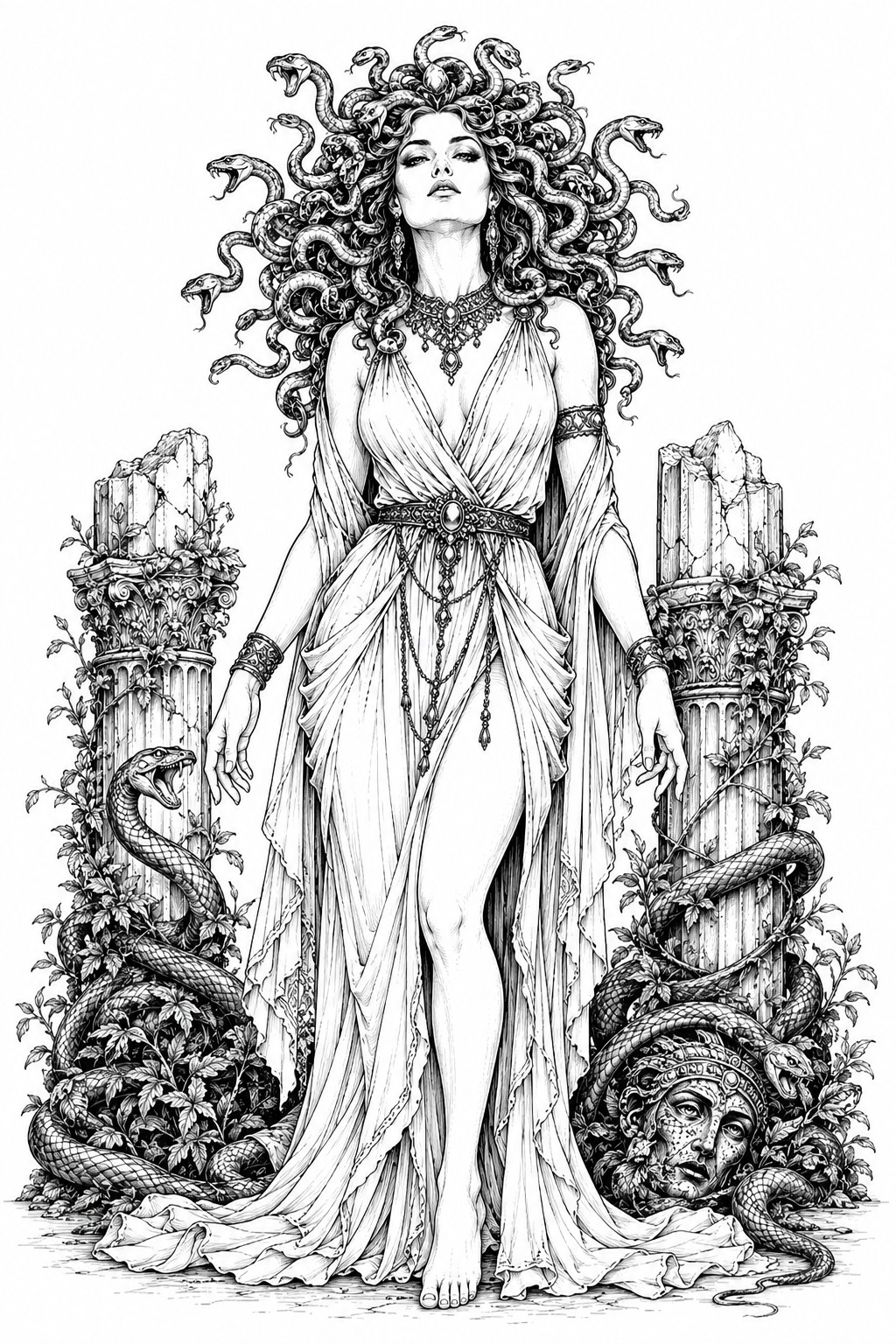
- Serpents
- Gorgon face
- Petrifying gaze
- Gorgoneion
- Broken stone
Offerings
- No securely attested ancient offering cult is assigned
- Modern personal offerings should be identified as contemporary
Aspects
- One of the Gorgons
- Mortal sister in influential sources
- Bearer of the petrifying gaze
- Protective Gorgoneion image
- Modern symbol of survival and rage
Magical / Spiritual Work
- Protective symbolism
- Boundary work
- Shadow work
- Survival
- Autonomy
- Transformation
⚠ Important Context
Medusa is an ancient mythic Gorgon and protective image, not automatically an historically worshipped Greek goddess. Earlier Greek accounts, Ovid’s later Roman transformation story, and modern devotion are distinct layers.
Devotional Approach
Use source-aware study, protective imagery, art, reflection, and boundary work; clearly identify devotional, feminist, survival, and transformation readings as contemporary practice.
Page 2 of 2
Deeper Reading
Historical & Cultural Context
Hesiod names Medusa among the three Gorgon sisters and distinguishes her as mortal. Greek artists made the frontal Gorgon face, or gorgoneion, one of antiquity’s most pervasive apotropaic images: it appeared on architecture, shields and armor, vessels, jewelry, coins, and other objects intended to confront or repel danger. Roman domestic mosaics continued this protective visual role. The Grimoire places Medusa in the Deity section for organizational and modern-practice purposes, but ancient mythological and iconographic evidence should not be misrepresented as proof of a widespread temple cult.
Myths & Primary Stories
In Greek tradition, Perseus undertakes the beheading of Medusa and receives aid and equipment from divine helpers, including Athena. He avoids her deadly gaze, takes her head, and later uses it as a powerful protective weapon; Athena ultimately bears the gorgoneion. Pegasus and Chrysaor emerge from Medusa when she is killed. Earlier Greek evidence treats Medusa as a Gorgon. Centuries later, Ovid’s Roman Metamorphoses describes her as a beautiful maiden transformed after an encounter with Neptune in Minerva’s temple. That later literary variant profoundly shaped modern retellings but must not replace the earlier Greek traditions.
Evolution & Later Interpretations
Medusa’s image changed visibly through time. Archaic art favors a fearsome, frontal, monstrous face; Classical and later works increasingly humanize and feminize her features while preserving the dangerous gaze and protective function. Roman, medieval, Renaissance, and modern artists repeatedly reinterpreted the story. Contemporary feminist, psychological, Pagan, and popular readings often emphasize protection, survival, rage, bodily autonomy, injustice, trauma, or transformation. These are later receptions, not a single ancient consensus.
Worship & Historical Practice
No widespread ancient cult, temple system, priesthood, festival calendar, or standard offering practice for Medusa is established by the evidence used here. What is strongly documented is the gorgoneion’s apotropaic role on Greek architecture, armor, vessels, jewelry, and later Roman domestic mosaics. Displaying protective imagery is not automatically the same as worshipping the mythic figure. Historical discussion therefore centers on myth, art, and danger-averting visual use.
Working With & Honoring This Figure Today
Some contemporary practitioners work devotionally or magically with Medusa as a protector or as a symbol of survival, boundaries, justified rage, autonomy, and transformation. Practice may include source study, art, protective imagery, journaling, prayer identified as modern, or boundary work. These approaches can be meaningful while remaining modern reception; they should not be presented as the recovery of a uniform ancient Medusa cult.
Notes & Personal Connection
Explore This Entry
Keep This Grimoire Entry
Print every generated page in order, single-sided or front and back.
Download to Print