Herbs & Salts Grimoire
Devil's Claw
Harpagophytum procumbens (Burch.) DC. ex Meisn.; H. zeyheri is also used medicinallyQuick Reference
Traditional Uses
European herbal regulation recognizes traditional root preparations for digestive complaints/loss of appetite and minor joint pain. Traditional-use status is not a guarantee of effectiveness for every marketed claim.
Magical Associations
- resilience
- tenacity
- endurance
- defensive boundaries
- obstacle work
- uncrossing
Folklore
Indigenous to southern Africa with documented medicinal use among peoples of the region, including San and Khoi traditions; later became an international herbal commodity. Preserve this southern African context rather than inventing European occult antiquity.
Core Correspondences
⚠ Caution
EMA materials advise caution with cardiac disorders and against use in gastric/duodenal ulcer; pregnancy/lactation safety is not established. Medicinal use can cause gastrointestinal effects and warrants clinician review with relevant conditions/medications.
Educational purposes only. Not medical advice.How to Work With
A strong documented historical Western magical tradition is not established. Contemporary eclectic practitioners may use the hooked fruit/name symbolically for tenacity, defensive boundaries, holding firm, obstacle work or uncrossing. Label these as modern symbolic applications, not indigenous historical claims.
Page 2 of 2
Deeper Reading
Botanical Profile
- Plant Family
- Pedaliaceae
- Common Names
- grapple plant · wood spider
- Growth Habit
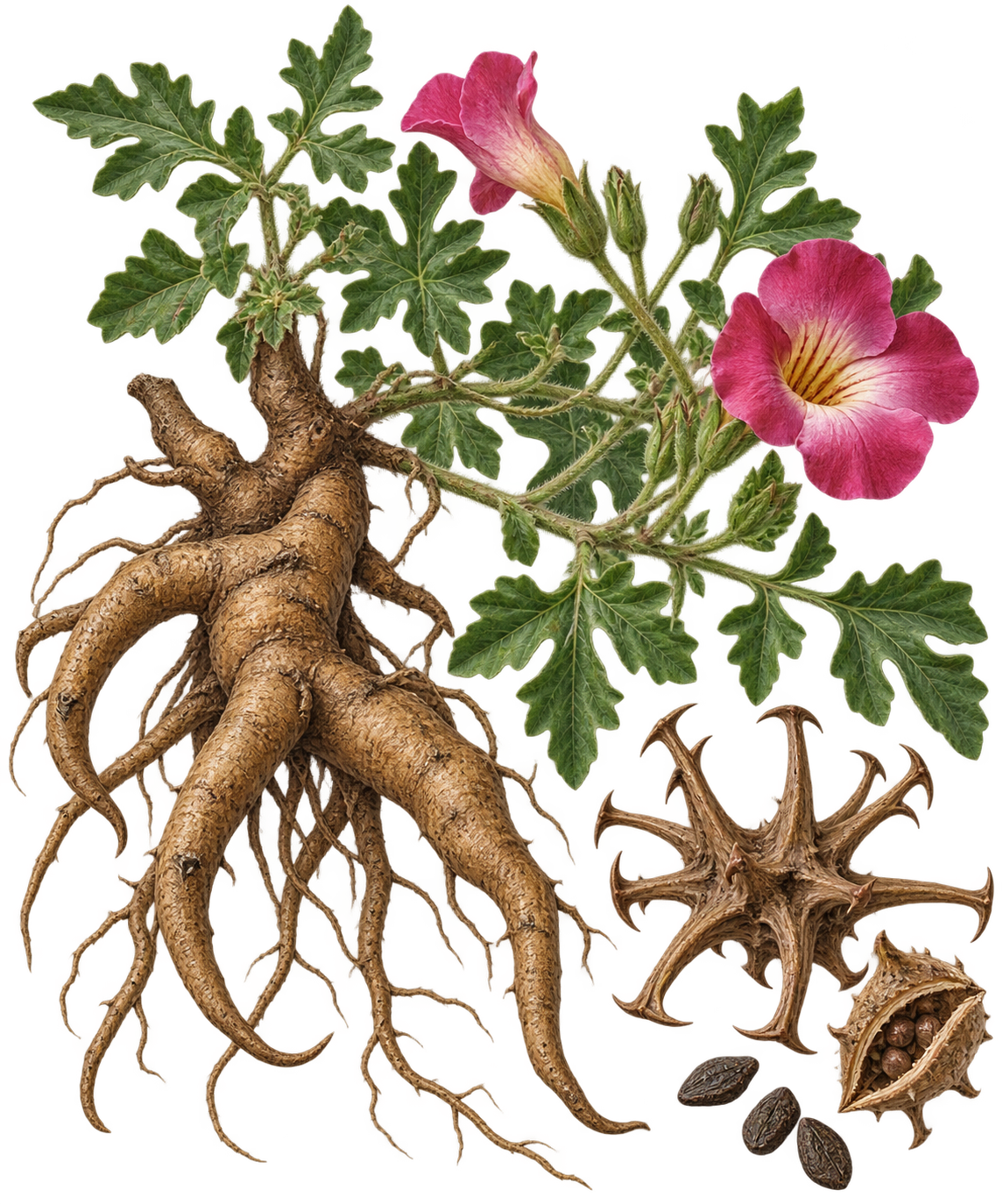
- Low-growing southern African plant of arid regions. Its woody fruit develops long hooked projections that catch on animals. Secondary storage tubers/root are the principal medicinal material.
- Native Range
- Indigenous to southern Africa with documented medicinal use among peoples of the region, including San and Khoi traditions; later became an international herbal commodity. Preserve this southern African context rather than inventing European occult antiquity.
- Habitat
- Low-growing southern African plant of arid regions. Its woody fruit develops long hooked projections that catch on animals. Secondary storage tubers/root are the principal medicinal material.
- Identifying Characteristics
- Low-growing southern African plant of arid regions. Its woody fruit develops long hooked projections that catch on animals. Secondary storage tubers/root are the principal medicinal material.
Traditional & Historical Medicinal Uses
European herbal regulation recognizes traditional root preparations for digestive complaints/loss of appetite and minor joint pain. Traditional-use status is not a guarantee of effectiveness for every marketed claim.
Magical Uses
A strong documented historical Western magical tradition is not established. Contemporary eclectic practitioners may use the hooked fruit/name symbolically for tenacity, defensive boundaries, holding firm, obstacle work or uncrossing. Label these as modern symbolic applications, not indigenous historical claims.
Modern Evidence
Some clinical research has examined devil's claw preparations for pain, but products and evidence vary. It should not replace diagnosis or treatment, and interactions and gastrointestinal, cardiac, pregnancy, and bleeding concerns require professional review.
Notes & Personal Connection
Add your own experiences, observations, and notes about working with this plant. How does it speak to you? What is your personal connection?
Keep This Grimoire Entry
Print Page 1 and Page 2 together, single-sided or front and back.
Download to Print