Herbs & Salts Grimoire
Heather
Calluna vulgaris (L.) HullQuick Reference
Traditional Uses
Heather has long histories in household craft, bedding, thatching, and European folk-herbal practice. Traditional accounts mention urinary, cleansing, and soothing uses, but older use is not proof of modern effectiveness.
Magical Associations
- Luck
- Protection
- Admiration
- Resilience
- Rest
- Ancestral memory
- Wild places
- Solitude with softness
Folklore
Heather is strongly associated with Scottish and broader British and European moorland folklore. White heather is widely treated as lucky in later folk belief.
Core Correspondences
Witchcraft Uses
- Luck charms
- House blessings
- Protective bundles
- Rest rituals
- Ancestral altars
- Land-connection work
- Late-summer and autumn transition work
⚠ Caution
Correct botanical identification matters because common names overlap. Allergy is possible, and historical herbal reputation is not a substitute for professional care.
Educational purposes only. Not medical advice.How to Work With
Place a small dried sprig near a written blessing, include it in a contained protective home charm, or use it in seasonal altar work focused on resilience, landscape memory, rest, or ancestral ties.
Best Time to Harvest
Gather flowering tops while in bloom on a dry day after surface moisture has lifted. Dry promptly with good airflow and harvest only correctly identified, lawful, unsprayed material.
Correspondences
- Season
- Late summerAutumn
Page 2 of 2
Deeper Reading
Botanical Profile
- Plant Family
- Ericaceae
- Common Names
- Ling · Common heather · Scots heather
- Alternate Names
- Calluna vulgaris
- Growth Habit
- Low evergreen subshrub forming mounded or spreading growth.
- Native Range
- Macaronesia and Europe to central Siberia, with native populations in northern Morocco; introduced elsewhere.
- Habitat
- Acidic, well-drained heathland, moorland, and other open habitats with full sun to light shade and even moisture without waterlogging.
- Identifying Characteristics
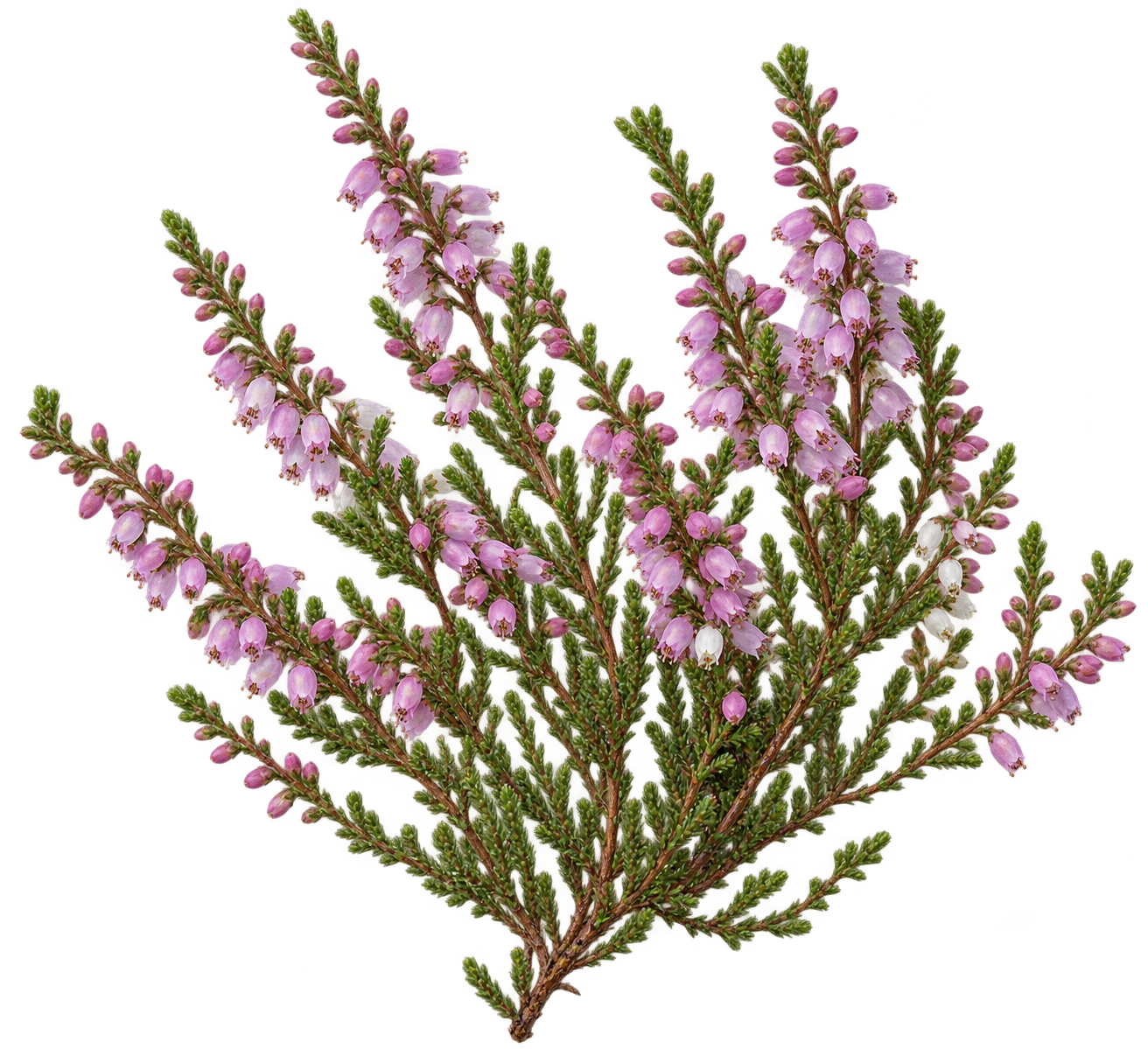
- A fine, twiggy evergreen shrub with tiny scale-like leaves packed along the stems and many small urn- or bell-shaped flowers in pink, mauve, lavender, purple, or white.
- Parts Traditionally Used
- Flowering tops · Aerial parts
Taxonomic Note
This entry refers to Calluna vulgaris and should not be collapsed into unrelated ornamental plants casually sold as ‘heather’ or ‘heath.’
History & Cultural Context
Heather is closely tied to European heath and moor landscapes, especially in Scottish and British cultural imagination. Its practical household uses and wild-land setting inform much of its later folklore.
Traditional & Historical Medicinal Uses
European folk traditions used flowering tops or aerial parts in preparations described for urinary, cleansing, and soothing purposes. The plant also served practical roles in bedding, thatching, brooms, and household craft. Evidence standards for many medicinal claims remain limited, so this history should not be treated as modern proof.
Magical Uses
Modern practice uses heather for luck, protection, quiet resilience, rest, landscape memory, and ancestral connection. Place a dried sprig near a written blessing, use it in a contained protective home charm, or include it on a seasonal altar. White-heather luck symbolism is folklore, not a guarantee.
Modern Evidence
Heather continues to appear in herbal literature, but its modern clinical evidence base is limited compared with more heavily studied plants. It is best presented as a traditional and folklore-rich botanical rather than a strongly evidence-backed medicine.
Notes & Personal Connection
Add your own experiences, observations, and notes about working with this plant. How does it speak to you? What is your personal connection?
Keep This Grimoire Entry
Print Page 1 and Page 2 together, single-sided or front and back.
Download to Print