Herbs & Salts Grimoire
Red Clover
Trifolium pratenseQuick Reference
Traditional Uses
Red clover has been used in traditional herbal practice, including for women's health, skin complaints, and respiratory discomfort. Modern research has not conclusively established benefits for any health condition.
Magical Associations
- Love
- Devotion
- Feminine energy
- Healing symbolism
- Attraction
- Kindness
- Good luck
- Prosperity
- Emotional balance
Folklore
Clover has long been associated with luck and blessing. Red clover gathered from spring meadows appears in modern folk practice as a charm for affection, protection, prosperity, and seasonal good fortune.
Core Correspondences
- Gender
- Feminine
Witchcraft Uses
- Love and devotion charms
- Good-luck sachets
- Prosperity workings
- Gratitude offerings
- Self-love and emotional-balance rituals
⚠ Caution
Red clover supplements may be unsafe during pregnancy or breastfeeding. Because they contain isoflavones and may interact with medicines, consult a qualified clinician before concentrated use, especially with hormone-sensitive conditions or blood-thinning medicines.
Educational purposes only. Not medical advice.How to Work With
Use the dried flowers symbolically in a luck, love, or prosperity charm; place them on an altar as an offering of gratitude; or grow red clover for pollinators and soil-building. Internal use requires careful attention to pregnancy, breastfeeding, medicines, and hormone-sensitive conditions.
Page 2 of 2
Deeper Reading
Botanical Profile
- Plant Family
- Fabaceae
- Alternate Names
- Cow clover · Meadow clover · Wild clover · Trifolium · Purple clover
- Growth Habit
- Short-lived herbaceous perennial legume
- Native Range
- Macaronesia and northwestern Africa, and Europe to Mongolia and the Himalaya; cultivated and naturalized widely
- Habitat
- Meadows, pastures, fields, roadsides, lawns, waste areas, and other open grassy ground
- Identifying Characteristics
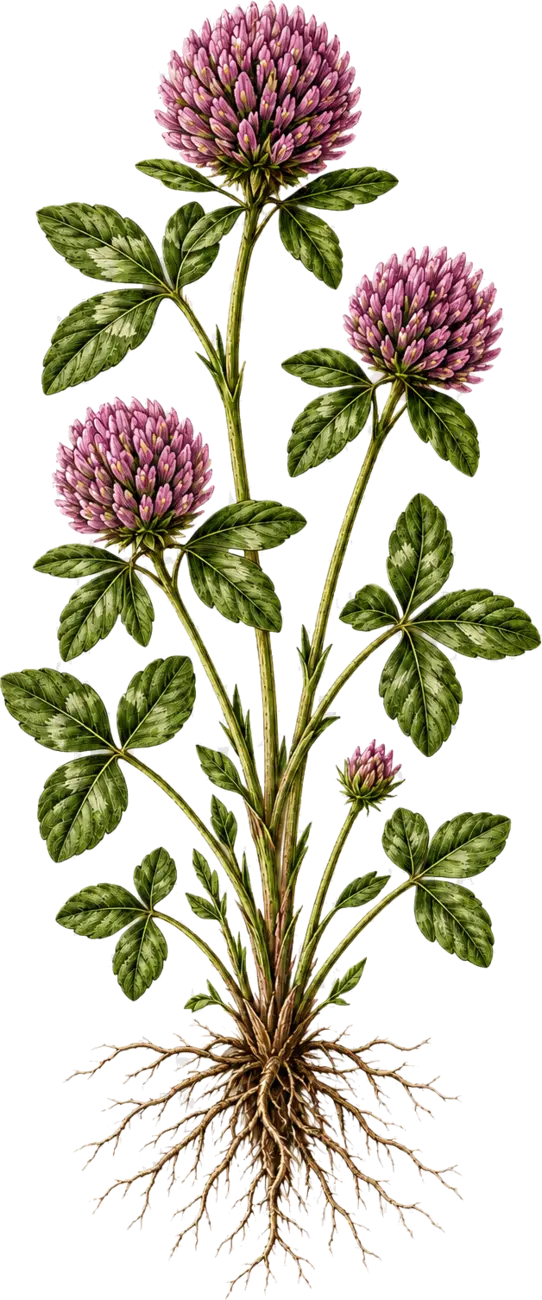
- Three leaflets, usually marked with a pale chevron, on softly hairy stems; rounded pink to reddish-purple flower heads; and a branching crown and taproot.
- Parts Traditionally Used
- Flowering tops · Flowers · Leaves
Traditional & Historical Medicinal Uses
Red clover has been used as food, forage, and traditional herbal material. Historical herbal practice has included teas and preparations of the flowering tops for skin complaints, coughs, and women's health. Modern supplements are promoted especially for menopausal symptoms because red clover contains isoflavones that are structurally similar to estrogen. The U.S. National Center for Complementary and Integrative Health reports that research has not shown conclusive benefit for any health condition; results for hot flashes, cholesterol, and bone density remain inconsistent or limited.
Magical Uses
The approved Black Cat source places red clover in a gentle magical vocabulary of love, devotion, luck, prosperity, kindness, and emotional balance. Its abundant meadow growth and three-part leaves connect it naturally with seasonal blessing and good-fortune folklore, while its pink flower heads support modern love and self-love symbolism. Dried flowers may be placed in a charm bag, used as a gratitude offering, or included symbolically in prosperity and relationship work. These spiritual practices are not guarantees of outcomes or substitutes for care.
Notes & Personal Connection
Add your own experiences, observations, and notes about working with this plant. How does it speak to you? What is your personal connection?
Keep This Grimoire Entry
Print Page 1 and Page 2 together, single-sided or front and back.
Download to Print