Herbs & Salts Grimoire
Wormwood
Artemisia absinthium L.Quick Reference
Traditional Uses
Wormwood has a long European and Mediterranean history as an intensely bitter herb used around appetite and digestive complaints. EMA recognizes narrowly defined traditional-use indications based on long-standing use, not established clinical efficacy.
Magical Associations
- Protection
- Banishing
- Cleansing
- Boundaries
- Uncrossing
- Release
- Divination
- Dream work
- Spirit work
- Ancestor work
Folklore
Wormwood's intense bitterness and strong aroma shaped later associations with severity, protection, cleansing, separation, unwanted influence, and firm boundaries.
Core Correspondences
- Element
- Air
Witchcraft Uses
- Sealed protection or boundary sachets
- Banishing and release work
- Divination and discernment practice
- Dream-work symbolism
- Ancestor or spirit-boundary work
- Smoke-free cleansing
⚠ Caution
Wormwood can contain neurotoxic thujone. Avoid during pregnancy or lactation, in children, with Asteraceae allergy, and in specified liver or biliary conditions. Do not ingest the essential oil or casually self-dose concentrated products.
Educational purposes only. Not medical advice.How to Work With
Keep a small amount in a sealed boundary sachet, place a labeled jar near a divination area, or use the botanical image in release work. External, sealed, and smoke-free methods are preferable; ingestion is unnecessary for magical practice.
Best Time to Harvest
Harvest healthy leaves and flowering tops around the flowering period on a dry day after dew has lifted. Avoid polluted or sprayed sites, dry with good ventilation away from harsh sun, and label the material clearly.
Correspondences
- Season
- SummerEarly autumn
Page 2 of 2
Deeper Reading
Botanical Profile
- Plant Family
- Asteraceae
- Common Names
- Common wormwood · Absinthe wormwood · Grand wormwood
- Alternate Names
- Absinthium · Artemisia absinthium · Absinthe herb
- Growth Habit
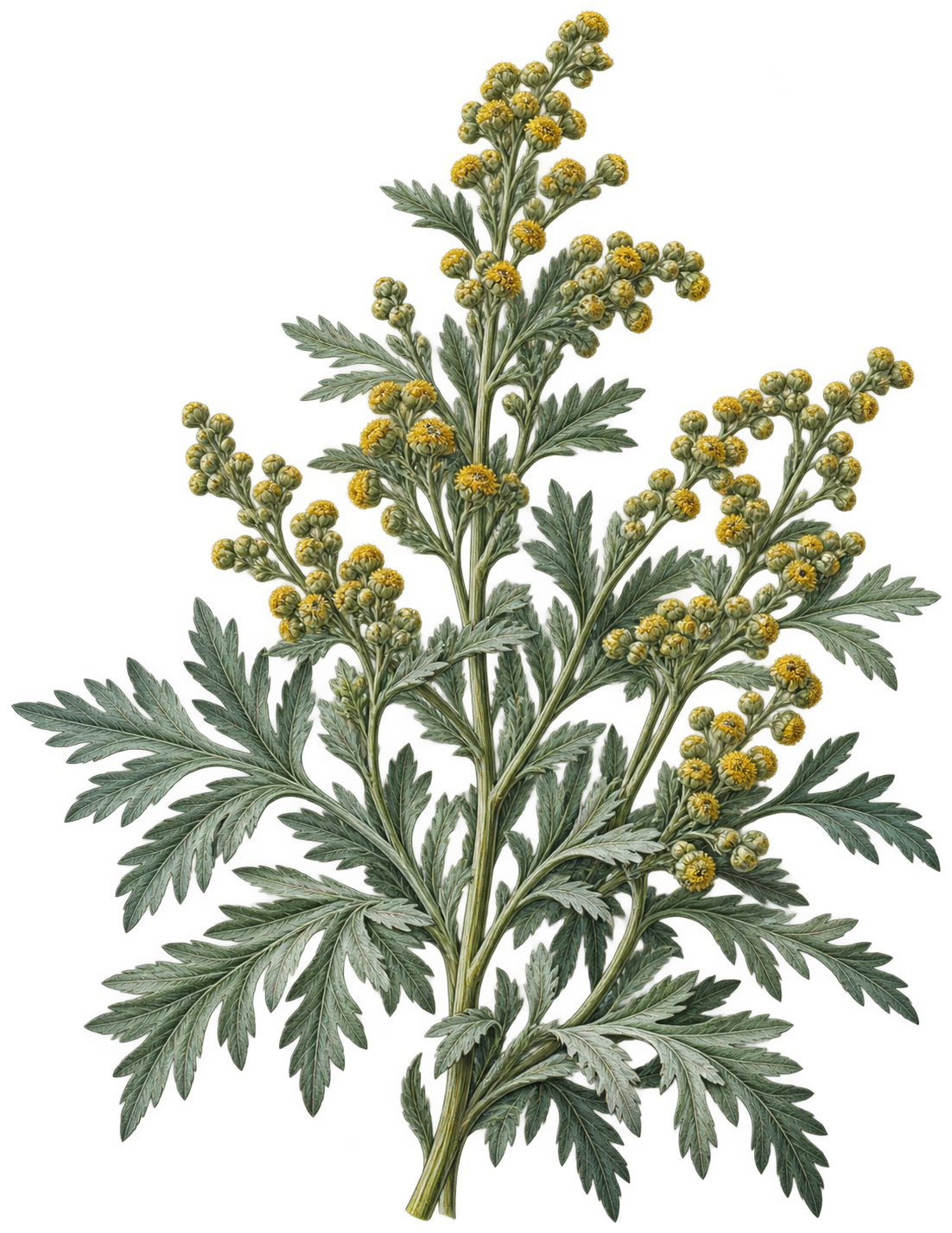
- Bushy aromatic herbaceous perennial, commonly 2–4 feet tall, with upright branching stems and a somewhat woody base.
- Native Range
- Europe through parts of western and central Asia to Siberia and the western Himalaya, with native populations in North Africa; now cultivated and naturalized in many temperate regions.
- Habitat
- Open sunny places with well-drained soil, including dry fields, rocky ground, roadsides, waste places, old gardens, and sunny slopes.
- Identifying Characteristics
- Silvery-gray, softly hairy, deeply divided leaves; pale branching stems; and clusters of small yellow to yellow-green button-like flower heads. The plant is strongly aromatic and intensely bitter.
- Parts Traditionally Used
- Leaves · Leafy flowering tops
History & Cultural Context
Wormwood's history crosses traditional medicine, bitters, vermouth, absinthe, household folk use, and beverage flavoring. Historical absinthe culture combined genuine toxicology concerns with very high alcohol exposure, sensational journalism, and artistic mythology. The genus name Artemisia has long been associated in historical and popular writing with Artemis, but that does not prove one universal ancient devotional relationship between Wormwood and the goddess.
Traditional & Historical Medicinal Uses
Wormwood has long been used in European and Mediterranean bitters, household herbal practice, vermouth, and absinthe. Historical preparations were associated with poor appetite, digestive discomfort, intestinal worms, fever, and other folk complaints. The European Medicines Agency recognizes Wormwood herb as a traditional herbal medicinal product for temporary loss of appetite and mild dyspeptic or gastrointestinal complaints. That classification records long-standing use rather than well-established clinical efficacy. Historical anthelmintic use should not be turned into instructions to self-treat parasites.
Magical Uses
In later folk-magic and modern occult practice, Wormwood's bitterness and strong aroma support associations with protection, banishing, uncrossing, cleansing, firm boundaries, release, divination, dreams, and spirit work. It is especially suited to intentions involving removal, closure, or clear-eyed discernment rather than comfort. Keep a small amount sealed in a sachet or jar, place it near a divination area, or use the botanical image in boundary work. Burning is unnecessary; a labeled container, written herb name, or image offers a smoke-free method. These are modern or folk-practice associations, not one universal ancient tradition.
Modern Evidence
Modern research has examined constituents and biological activities of Artemisia absinthium, but laboratory, animal, mechanistic, and preliminary findings do not establish it as a treatment for disease. Wormwood is not Artemisia annua, the species famously associated with artemisinin, and it must not be presented as an artemisinin substitute or malaria treatment.
Notes & Personal Connection
Add your own experiences, observations, and notes about working with this plant. How does it speak to you? What is your personal connection?
Keep This Grimoire Entry
Print Page 1 and Page 2 together, single-sided or front and back.
Download to Print